The Humpback Whale, Our Impressive BVI Visitor
By Claudia Colli
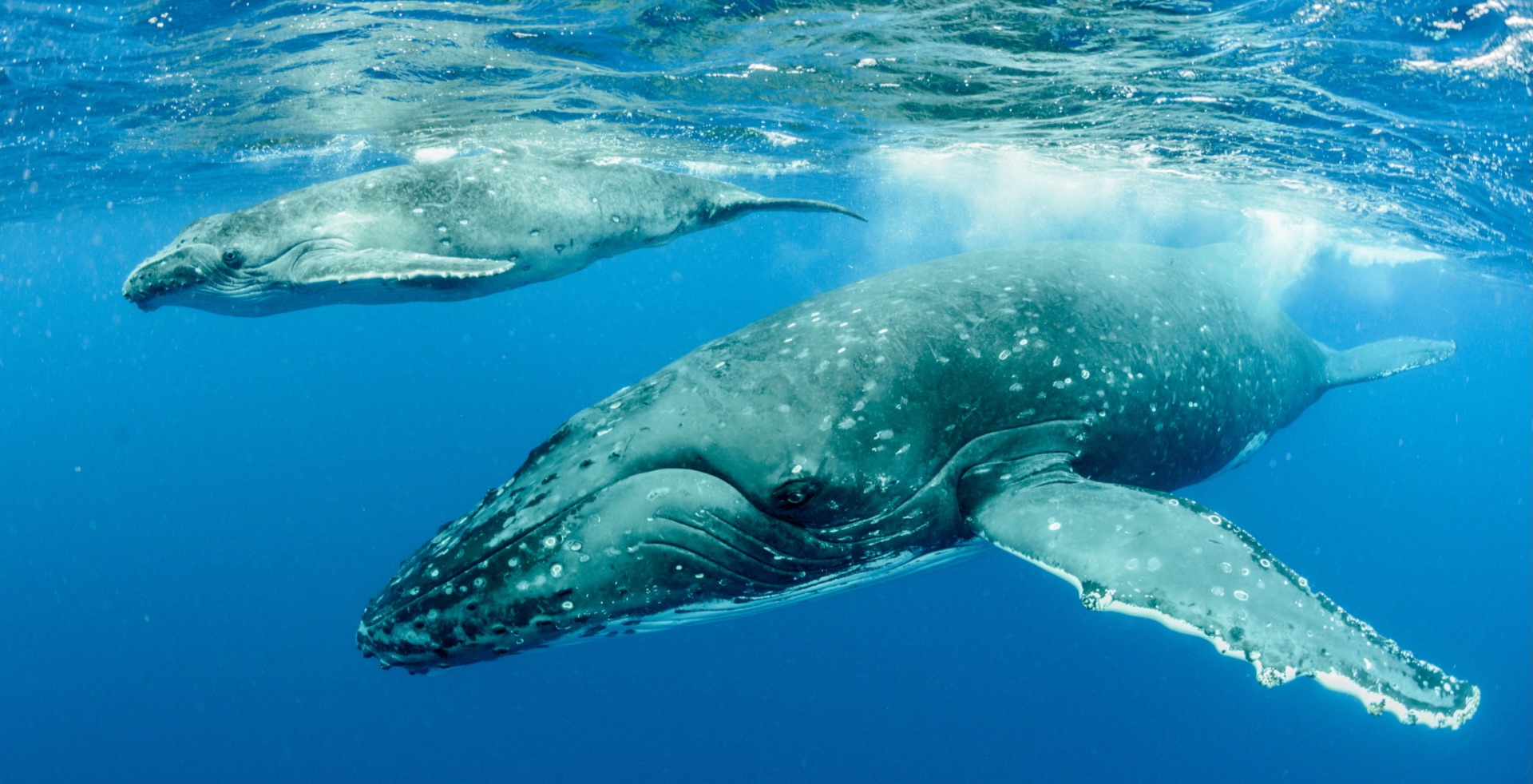
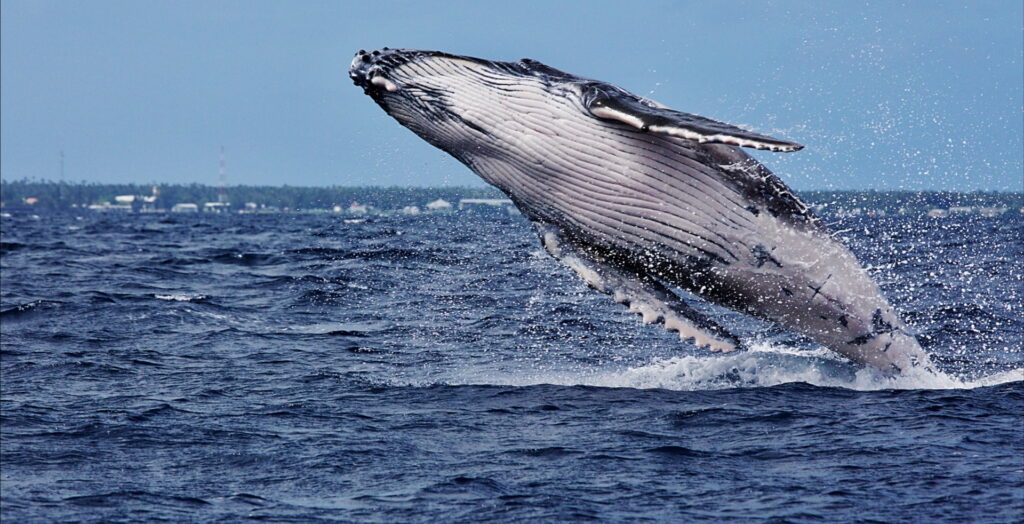
I have spotted humpback whales from a distance, and once when my son Jason was small, we went on a whale watching excursion, giving us a closeup view of the magnificent creatures. Binoculars in hand, it was a fun day dedicated to spotting these annual visitors who migrate to the Caribbean from waters far to our north. Like annual snowbirds, humpbacks travel to the Caribbean from December to May where they enjoy our warm waters, breed and give birth to their calves. We watched excitedly as these impressive animals breached – their arched backs emerged from the water as they rose to the surface; a spout of water sprayed upwards as they once again dove beneath the water, their huge flukes disappearing beneath the waves.
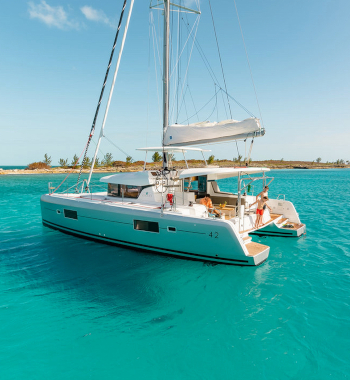
For the most part, humpbacks are quiet and unobtrusive guests barely noticed by islanders. They swim through the Territory’s calm and protected waters with a grace and beauty belying their monstrous size. At 40-feet, the average humpback is the length of a good-sized yacht. A wave of their fluke, which can measure 15 feet across, can be equally impressive. Yet in spite of their imposing size they are gentle creatures, shy but not inhospitable when it comes to human contact.
There is an aura of mystery about humpbacks, waterborne mammals known for their melodic song and vast migratory treks. Just what brings the humpback to the Virgin Islands like clockwork each winter, and where do they go when not here?
Whales make their way to the Caribbean each winter to breed. At birth the calves are massive (around 1 ton) and need help reaching the surface for their first breath. But local food is scarce and not to the humpback’s liking, so as soon as their calves are old enough to sustain the long journey, pods of three to 15 whales begin migrating northward to summer feeding grounds in the Arctic ocean. En route they stop off for a short period of relaxation in Bermuda. They then continue their unerring northerly course, hugging the North American shoreline past Newfoundland, Iceland, Norway and finally the Arctic.
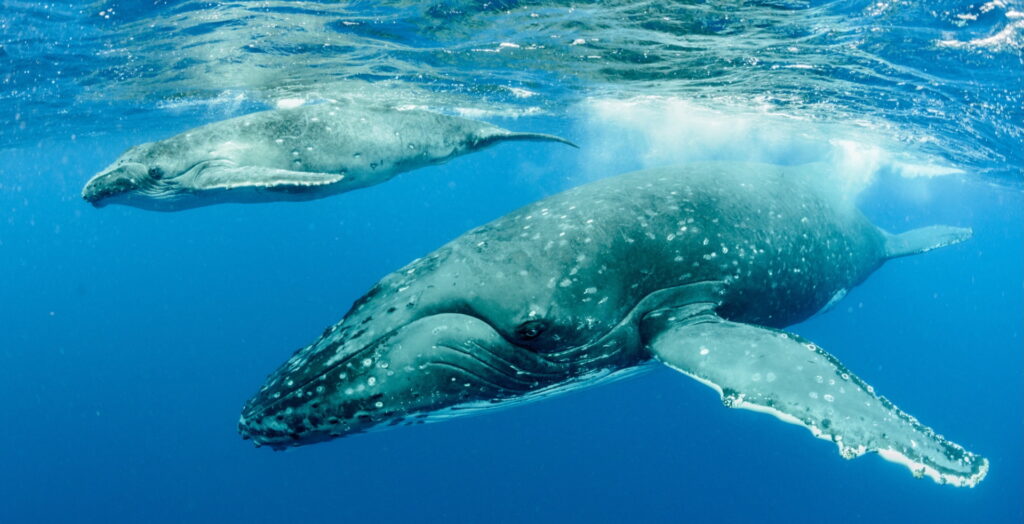
Humpbacks are part of the baleen group of whales. Baleens do not have teeth; instead their mouths contain a plate of whalebone (baleen) whose fringed edge acts as a sieve. Through its baleen, the whale strains a vast quantity of water to remove small plankton-like creatures known as krill – as well as herring and mackerel.
The Latin term for humpback is Megaptera novaengliae which means bi-winged New Englander. But the term New Englander is a less accurate decription since branches of the great whale family are also found in the Southern Hemisphere and in the Pacific Ocean where they migrate from the Arctic to summer breeding grounds in Hawaii. The paths of these humbacks never cross and populations never intermix.
Humpbacks are perhaps the most playful of the world’s whales. While in the VI they are often seen floating on the surface, their giant arched backs looking from the distance like over-inflated rubber dinghies.
But when the whim strikes them, they perform spirited leaps clear out of the water. Then as suddenly as they started, they stop, leaving only a frothy trail of spray and a huge wake as a reminder of their acrobatics.
According to some scientists, such leaps – called breaching – are as practical as playful since they may ease itcing caused by up to half a ton of barnacles that cling to their backs in cold waters. When whales sound, or dive beneath the surface, they can reach a depth of 325 feet and remain under for about 10-15 minutes before resurfacing with a whoosh of water from their spout.
Scientific studies are being conducted into their migratory patterns, how they so unerringly plot their way through the ocean, as well as their complex methods of communication. The singing of the humpback has so far provided man’s best insight into their intelligence. The eerie and mysterious underwater songs of the whale evolve, seemingly composed as the go along. The songs of two consecutive years are more alike than two songs separated by several years. But regardless of how complex the changes are, each whale apparently keeps pace with the others and every year the new song is the only one a listener hears. Even more impressive is the fact that the humpbacks seem to remember their songs from year to year. As each tropical season begins the whale sings the previous year’s song with changes occurring only as the winter progresses.
Man’s relationship with humpbacks hasn’t always been as curious nor benevolent as today. Overhunting the humpback in the early 20th century brought them to the verge of extinction. Both their slow regular migratory pattern which takes them close to shorelines and a rather naïve attitude to the hunters made them easy prey.
Today, the humpback is making a gratifying comeback. They have rebounded from perhaps 10,000 whales in the 1960s to up to 100,000 globally today.
Here in the British Virgin Islands, the Department of Conservation and Fisheries keeps tabs on the whales to determine how local populations are faring. As boating activity in the Territory increases, the humpbacks face a different danger – injury by boat propellers. Boaters are therefore urged to keep a watchful eye out for these behemoths and steer clear of them when spotted. But even from afar, there is nothing more thrilling than viewing these gentle giants of the sea.
For more about the BVI’s fascinating creatures go to: https://thebviinsider.com/leaping-lizards-and-the-bvis-other-fabulous-critters/
To learn more about conservation in the BVI go to: https://www.bviark.org/sea-turtle-conservation.html