The BVI’s Quakers
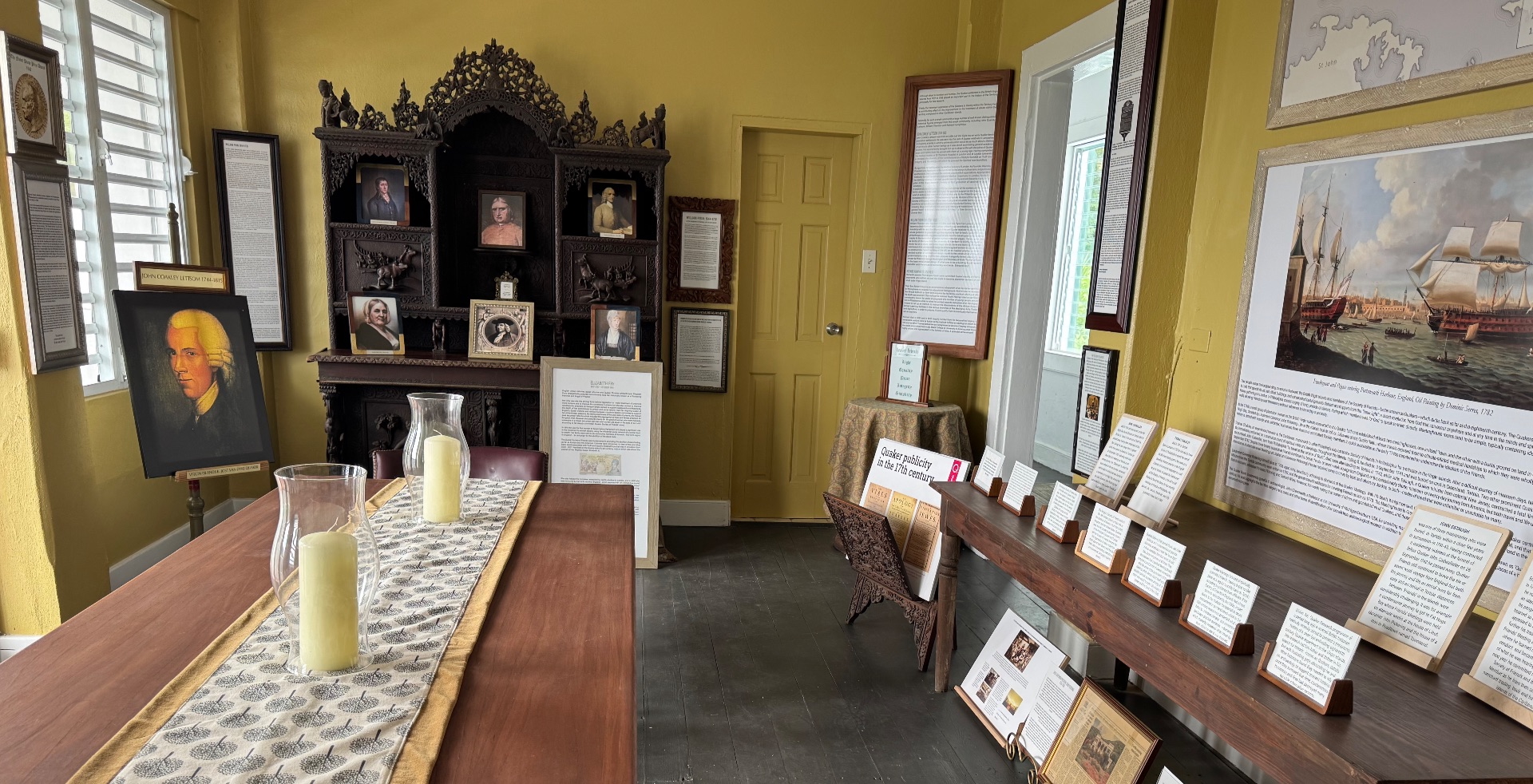
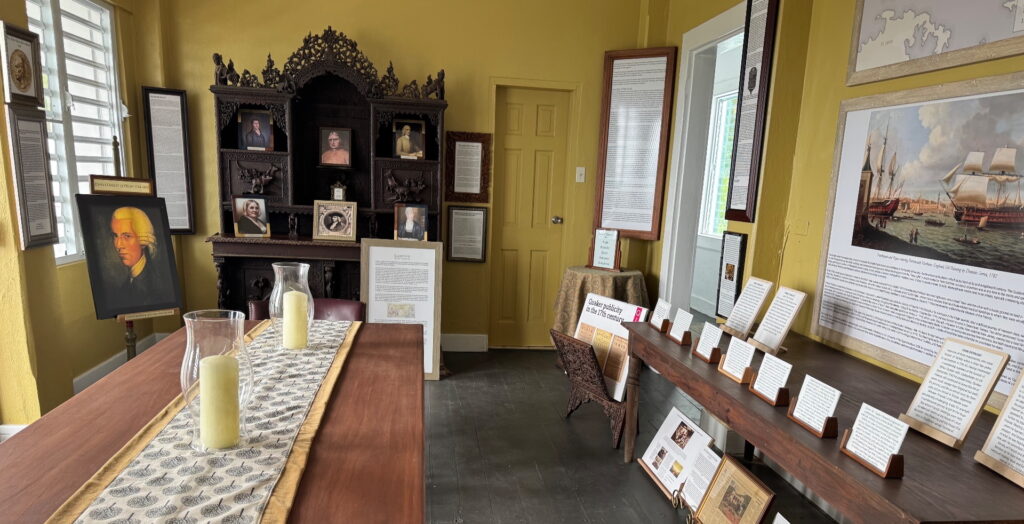
The designer of the US Capitol building and the founder of the Medical Society of London are among several significant 18th century Quakers born in the Virgin Islands. A new room at the Old Government House Museum celebrates these and other BVI Quaker’s achievements.
By Claudia Colli
English, Dutch, African: the BVI’s multifaceted history is the tale of differing nationalities, cultures and religions. Among these interweaving stories is that of the Quakers, and even though their chapter in the islands’ story was brief, it had a large impact on both the Virgin Islands and the world.
The history of the Society of Friends in the West Indies stretches back to 1655 when two English Quakers, Mary Fisher and Ann Austin stopped in Barbados on their way to Massachusetts. There they founded a small colony of Friends which grew to several hundred and began spreading northward as far as Jamaica.
In due course, the Society reached the BVI. During a visit to Virgin Gorda in 1727, Joshua Fielding who had started the Society in the Leeward Islands reported large meetings in the house of Governor John Pickering. Another Quaker, James Birket, noted during his stay on Tortola in 1739 that, the first that professed our principles in Tortola was the present governor, his name was Pickering. He came from Anguilla where formerly a small meeting was held.”
Just prior to this date Pickering moved the capital of the Virgin Islands from Virgin Gorda to Tortola. By 1741, the flock had grown to 30.
When in 1742, England and Spain went to war, Pickering’s young Society suffered a serious setback. Because Quaker principles prevent them from bearing arms, Pickering was asked to resign and Captain John Hunt became the Governor. Hunt’s wife was interested in the Quaker’s beliefs, but Hunt disapproved and prevented his wife from attending their meetings.
By 1744, around 100 Quakers remained in the area and there was no ministering Friend. Charles Jenkins, who in 1923 produced a comprehensive study of the Society’s presence in the BVI, Tortola: A Quaker Experiment of Long Ago in the Tropics, blamed the sect’s short history here on the decadent nature of island life. His list was long.
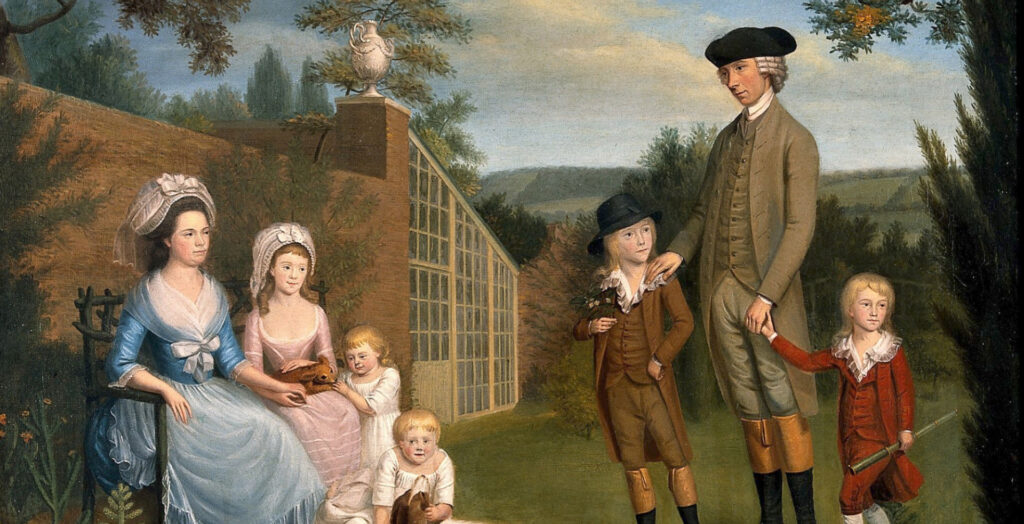
“The heated shade of the palm tree and exotic conditions of the tropics, the undermining effects of slave holding, a certain laxity of morals, the apparent necessity of military participation, the ease with which wealth was accumulated and the unhealthfulness of the climate, weakened the spiritual life and reduced and scattered the membership,” he stated.
Although Tortola’s Quaker population gradually declined, it lasted long enough to produce two prominent figures – John Coakley Lettsom and William Thornton – both of whom left a significant mark on the age in which they lived. John Coakley Lettsom was born in 1744 on his family’s plantation on Little Jost Van Dyke. His father Edward, owned sugar plantations at Cane Garden Bay and Little Jost Van Dyke and grew cotton on nearby Sandy Island (most likely what is now known as Sandy Cay). John was introduced to the Society through the meetings his father held at his home on the West End of Little Jost.
Life in the tropics at the time was precarious and several of his siblings died young. Of seven sets of twins, only he and his brother survived and at the age of six, he was sent to England where he had little contact with his family in the Virgin Islands. As a young man, he studied medicine, and it wasn’t until 1767 that he returned to Tortola following the death of his father and brother. His mother who remarried had gone to live in Cane Garden Bay.
In settling his father’s affairs he freed his family slaves and turned to medicine to earn a living. Within six months he had earned enough to return to England where he embarked on a busy and productive life. He opened a large practice; wrote extensively; was an avid naturalist and wrote several books on the subject. He was interested in prison reform and the proper medical care of prisoners; founded the Sea Bathing Infirmary at Margate and an open-air sanatorium. In 1773, he founded the Medical Society of London, perhaps his most well-known accomplishment.
Throughout his life he maintained the simple dress and ways of the Quakers. He was received by the King on more than one occasion without the required court dress and sword. It was this attitude, which made him critical of Tortola and he noted, “everything is splendor, dress, show, equipage, everything that can create an opinion of their importance is exerted to the utmost of their credit.”
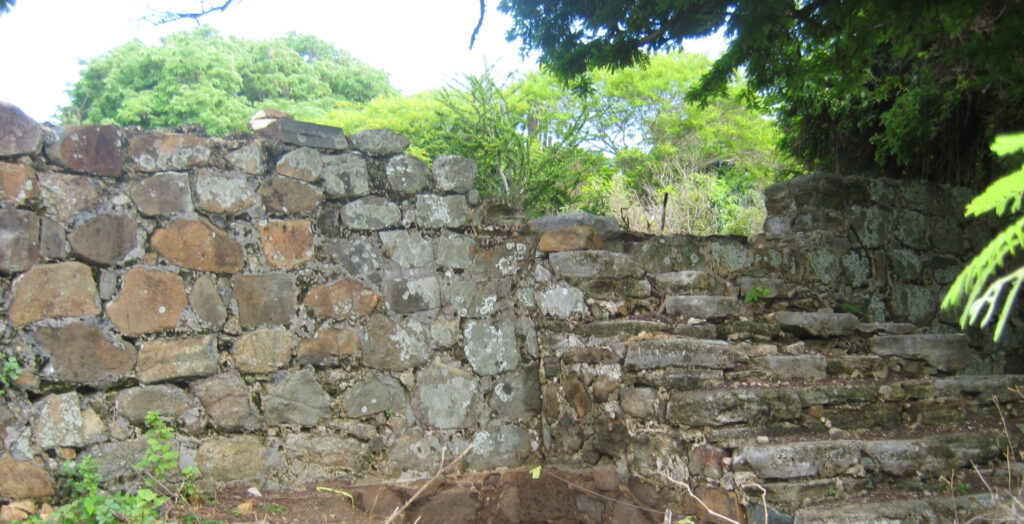
Although he spent little time in the Virgin Islands, his background as a Quaker and abhorrence of slavery had a great influence on his progressive thinking. Today, one can still see the remnants of the walls and foundations of his family home in Little Jost Van Dyke, along with the burial area of his parents beneath a large tamarind tree behind the house.
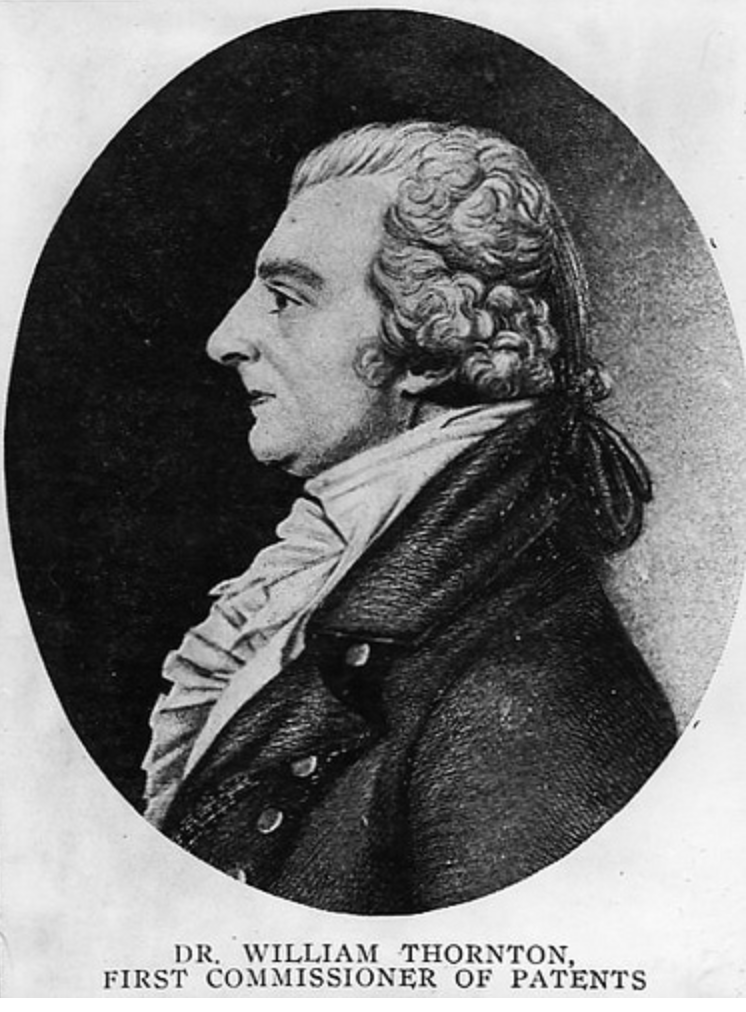
Like his friend John Lettsom, William Thornton, who was born on Jost Van Dyke in 1759, left his mark on the world. When he was five, his father, who was the owner of a large plantation at Pleasant Valley in Tortola, sent his son to England to be educated. He later studied medicine at the University of Edinburgh where he became acquainted with John Lettsom. After completing his studies, he briefly returned to Tortola, but in 1786 went to Philadelphia. Here he practiced medicine, wrote and developed an unsuccessful scheme to send his 70 Tortola slaves back to Africa. One of his avid interests was architecture and he soon won a competition for the design of the Philadelphia Library, founded by Benjamin Franklin.
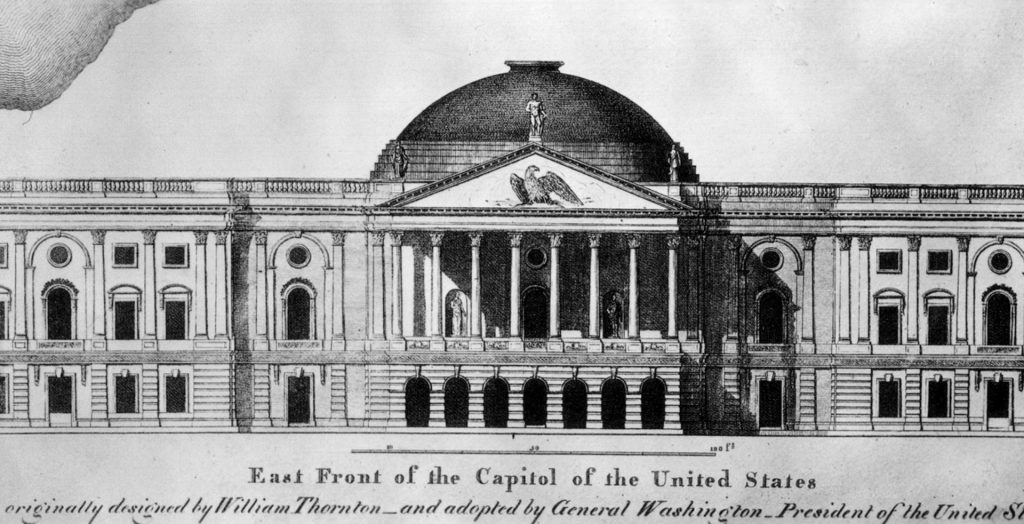
Shortly after his marriage, Thornton and his bride sailed to Tortola where he practiced medicine. In 1792, this amateur architect entered yet another contest, this time for the design of the US Capitol building and the president’s house in Washington, DC. After several months he sailed back to the United States, design in hand, and won the competition.
Describing the plans to the city’s commissioners, George Washington said, “The grandeur, simplicity and beauty of the exterior – the propriety with which the apartments are distributed – and the economy of the mass of the whole structure, will I doubt not give it a preference in your eyes, as it has done in mine.” Thomas Jefferson also commented on the design saying, “It is simple, noble, beautiful, excellently distributed…”
At a later date he helped Thomas Jefferson design the Georgian buildings for the University of Virginia. During the War of 1812, he joined the militia and was known for his efforts to save the capital’s buildings from destruction. From 1802 to 1929, Thornton served as the first superintendent of the US Patent Office and over the years received eight patents for his own inventions.
Richard Humphreys was yet another Tortolan Quaker of note. A less flamboyant character than Lettsom or Thornton, Humphreys was educated in Philadelphia and made his fortune as a goldsmith. Of Quaker principles to the end, at the time of his death, he left $10,000 to found a school in the city for the descendants of slaves.
The Quaker experiment on Tortola spanned a mere 45 years between 1727 and 1762; it’s short history was largely due to the conflict between island life and the strict tenets of the Society.
In 1762, the last Quaker monthly meeting was held on Tortola and by 1786 the final official communication from London signaled the end of Tortola’s Quaker era. Scaattered stone walls that had been part of Thornton’s great house at Pleasant Valley on Tortola, and the foundations and other remnants of Lettsom’s house on Little Jost Van Dyke are among the few remains of this brief chapter of BVI history.
Read more about the Old Government House Museum and its new Stamp Room
Additional information can be found at: