The BVI Celebrates the 250th Anniversary of Nottingham Estate
by Jane Bakewell
The story of Nottingham Estate is a fascinating chapter in British Virgin Islands History
A cultural fete celebrating the 250th anniversary of Nottingham Estate, the first free community of African descendants, took place in East End, Long Look in June this year. Marked by a territory-wide holiday, many around the island joined East End residents to commemorate Nottingham Estate’s establishment on June 30, 1776.
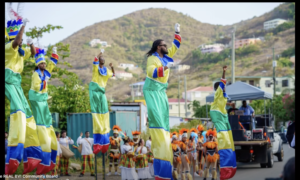
A joint initiative between government and the Long Look, East End Heritage Committee headed by Bernadine Louis and Ron Potter, provided a week’s worth of celebration including culture, history, musical performances and dance.
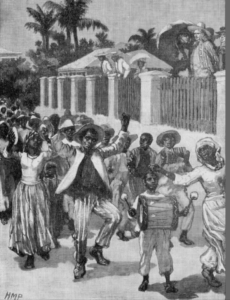
The community of Long Look on the east end of the island, was the hub of activity including a cultural parade, that featured historical costumes and living descendants of family lines dating back to the 18th century freed slaves. Many surnames of these families such as; Pickering, Lettsome, Malone and Potter, to name just a few, are familiar names to many of us who live here. In fact, twenty family names connected to Nottingham Estate were printed on a line of t-shirts for the commemoration.
The Sticket, as it is historically known, was a central spot in the estate, where communication, cultural events and news reached the community. The name is derived from members of the community “sticking” a note in this open-air gazebo to spread news. The present Long Look sticket was no exception with bands, the Heritage Dancers, the Long Look Methodist Church Brigade and many other performers keeping the celebrations going through out the day and into the evening.
A look back into the history of the formation of this community is a fascinating tale of Quaker religious influence in the islands on the prevailing slave trade. The Quaker’s profound moral considerations outweighed the economic opportunity they may have received from an inhumane labor system.
As history recounts, in the mid 18th century an Irish man named William Middleton acquired a land grant on Tortola for agriculture. Originally cotton was the predominant crop on the fifty-acre estate. Later agriculture such as “ground provision” (root vegetables) and raising livestock were the major income producing ventures. For plantation owners, slave labor became economically essential, and the slave trade grew in numbers during the early 18th century.
Middleton had a daughter named Mary, who married a man named Samuel Nottingham who inherited the estate. As a devout Quaker, he did not believe in using human beings for slave labor and granted twenty-five former slaves their freedom. They each purchased their freedom by paying five English pounds on June 30, 1776.
This act of “manumission” or liberating slaves from bondage from their owners, was historic for many reasons. First, they were the only freed blacks in the British Virgin Islands at the time. Nearby estates in Josiah’s Bay and Old Plantation, still had slave owners. Secondly, it was a first in another way. They saw their freedom even before across the pond, the United States, declared their own Emancipation Proclamation from colonization by England on July 4th, 1776.
It is also interesting to note, that the village of Kingston, with its historic Anglican church in Brandywine Bay, was established as a free settlement in 1831. It was a unique community for liberated Africans who were freed slaves from ships. They had already gained their freedom as part of the Atlantic slave trade –beneficiaries of the Abolition Act of 1807. Yet territory-wide, emancipation in the British Virgin Islands did not come until 1834, many years later.
Co-chair, Bernadine Louis, who heads up the Virgin Islands Studies Institute at the H. Lavity Stoutt Community College is profoundly interested in the islands’ culture and history and admitted in a recent interview to her fascination with genealogy as well. She has been working with Ron Potter on setting up a data base where residents who are interested can research and see if they are connected to the Nottingham Estate familial line.
While doing some research in 2014, Historian Louis shared that records show 104 named estates on Tortola from 1798. Long Look, Nottingham Estate was not listed as it was a community of free people.
For those visitors who have breezed by Long Look and not thought there was much to see, you may want to pause on the main road through the community for a quick history tour. Turn left on Blackburn highway heading east at the road before the Police Station and go part way up the hill and turn left at the long painted white wall.
Part of the history of Long Look is recorded right here through the wall paintings by local artist ‘Bing” Malone – also a descendant of Nottingham Estate. There is also a history of the Long Look Methodist Church along with photos of well- known community leaders.
Ms. Louis hopes in the future to revive again popular events like the “pop-up” museum and neighborhood tours that were a feature before the hurricanes in 2017. Hopefully, this anniversary and others in the future will continue to bring awareness to tourists and residents alike of the rich cultural heritage of the Virgin Islands.
Although the music and festivities have died down, the history of the Nottingham Estate stands strong with generations today informed and enriched by their past.