Everything You Need to Know About Sailing in The BVI
Story and photos courtesy Simon Scott and Bonnie Harrison
Positioned atop a curving archipelago that extends from the Florida Keys, south to the islands of Trinidad & Tobago, the British Virgin Islands have emerged as the sailing capital of the Caribbean. History documents the attention given these islands from explorers, traders, historians, adventurers, and pirates, but perhaps nothing has influenced both the history and sailing sector growth more than the geography and physical makeup. Blessed by the steady northeast trade winds and the proximity of the 36 islands and islets, each with their respective sheltered coves and inlets, the BVI is a sailor’s paradise and tropical charter epicenter.
Cruising Grounds
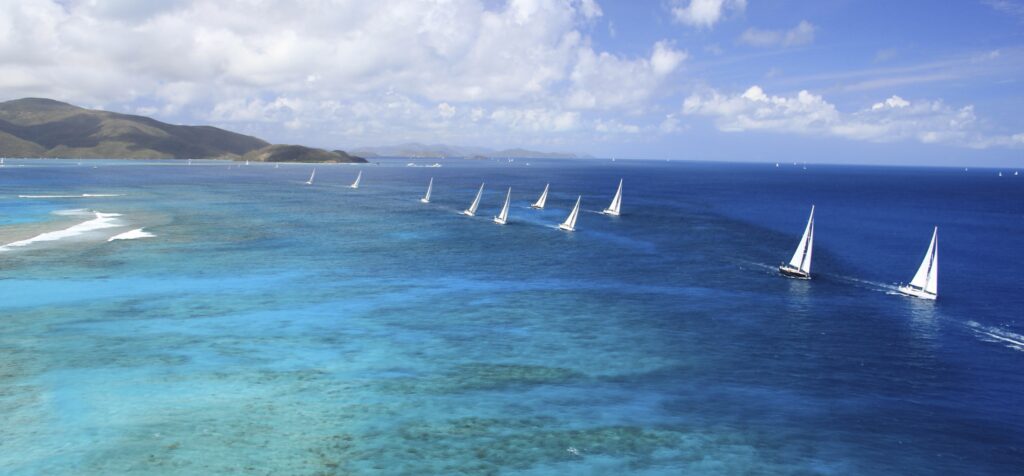
One could spend months exploring the possibilities of these cruising grounds. Two parallel lines of islands extend almost 35 miles east and west, forming Sir Francis Drake Channel. There are four main islands, Tortola, Jost Van Dyke, Virgin Gorda, and Anegada, around which are the numerous smaller islets and cays ready to explore. At the western end, Jost Van Dyke is known for its barefoot-in-the-sand vibe, beach bars and low-key restaurants serving excellent island cuisine. Foxy’s and Soggy Dollar have become famous with sailors around the world. When the sun goes down on “Jost” the sounds of island rhythms go up with partying that continues late into the night.
Sailing east up the channel, the islands of Norman, Peter, Cooper and Salt all have their own treasures to explore. The Baths on Virgin Gorda are a spectacular formation of large igneous boulders. Called batholiths, they rise from the sea forming a series of natural caves and grottos accessible from the beach for some exploration.
The North Sound on Virgin Gorda offers a water-sports haven anchored by iconic
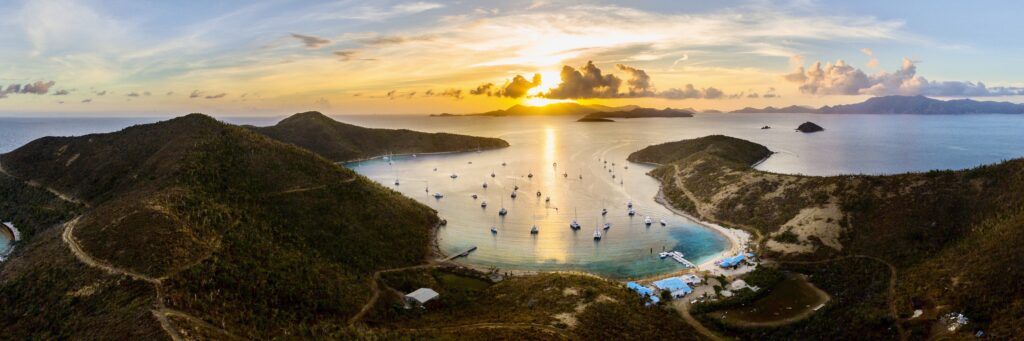
establishments such as Bitter End, Saba Rock, Leverick Bay and Oil Nut Bay and Marina.
Fifteen miles to the north of Virgin Gorda lies the low coral and limestone island of Anegada. There, sailors congregate to explore seemingly endless beaches on the reef-lined north shore, and to enjoy sunset dining on lobster at water’s edge. Conch Mountain, located on the south shore, is literally a mountain of conch shells, carbon dated back to the 13th century.
Getting there and getting around
Each year sailors from both sides of the Atlantic converge on the Caribbean to discover the cornucopia of cultures that make the region so desirable. Sailors from the USA make their way down through the islands of the Bahamas or directly from East Coast gateways. European arrivals usually make landfall farther south in the Windward Islands, then meander north to the BVI. For those chartering vessels, air access is both direct to the Tortola/Beef Island Airport (EIS) or via Puerto Rico (SJU) or St. Thomas (STT) where daily flights or ferries to the BVI are abundant. BVI is a British overseas territory. The government is a parliamentary democracy regulated by the Constitution of the British Virgin Islands. BVIslanders, as they are called, are predominantly of African descent, stemming from the islands’ plantation history. Currency is the US dollar and credit cards are largely accepted throughout the island chain. The spoken language is English; however, the locals also use an English-based creole that is a rapid idiomatic form delivered with a characteristic island rhythm.
Weather, Safety & Formalities
Located in the northeast trade wind belt, the BVI is blessed with excellent sailing conditions almost year-round. During winter months, when wind conditions are at their highest (18-30 knots), the geographical makeup of the island chain affords shelter to the sailing area. This makes for easier sailing conditions than one might logically experience farther to the south.
The BVI overall would be considered one of the safer destinations in the Caribbean. Though, occasional theft or petty crime is possible. Visitors are advised to regulate themselves accordingly. Dinghies should be locked or lifted out of the water at night. Don’t bring expensive jewelry or leave cash/credit cards lying around and do lock your boat when leaving.
Medical resources are available throughout the island. The main hospital is in Road Town on Tortola, with various clinics on Virgin Gorda, Jost Van Dyke and Anegada. Virgin Island Search and Rescue (VISAR) is a volunteer nonprofit which provides a professional 24-hour emergency service throughout the territory. Its crews respond to medical emergencies free of charge.
Visitors are allowed 30 days at entry after which an immigration extension is required. Vessels remaining in the BVI will need to apply for a temporary import license. A BVI Parks Permit can also be obtained at Customs. This provides access to the BVI National Parks and use of the mooring system at locations like the Baths on Virgin Gorda.
Marine Services and Support
Heavily influenced by the growth of the charter trade, marine support services have expanded dramatically at both the technical and service ends of the spectrum. Provisioning can be ordered online for delivery to your vessel from the major supermarkets (Riteway or One Mart). Pre-prepared provisioning is also available at individual providers such as Elite Culinaire (eliteculinaire.com).
There are two major boatyards with large capacity, Nanny Cay on Tortola and The Virgin Island Yacht Harbour on Virgin Gorda. Nanny Cay has storage for 260 vessels with two lifts capable of handling monohulls up to 68 feet and catamarans to a 32-foot beam. The 200-slip marina is home to multiple charter fleets and supporting technical service providers are in abundance along with a well-stocked chandlery. Virgin Gorda Yacht Harbour has dockage for 90 yachts with a max length of 180 feet. The marina complex has enjoyed a revitalization which will continue into 2026 and incorporate provisioning and deli services, rooftop bar, dive services etc. The boatyards are supported by two travel lifts and have a max capacity of 400 vessels. Technical services are available on site.
Diving, Snorkeling and the National Parks
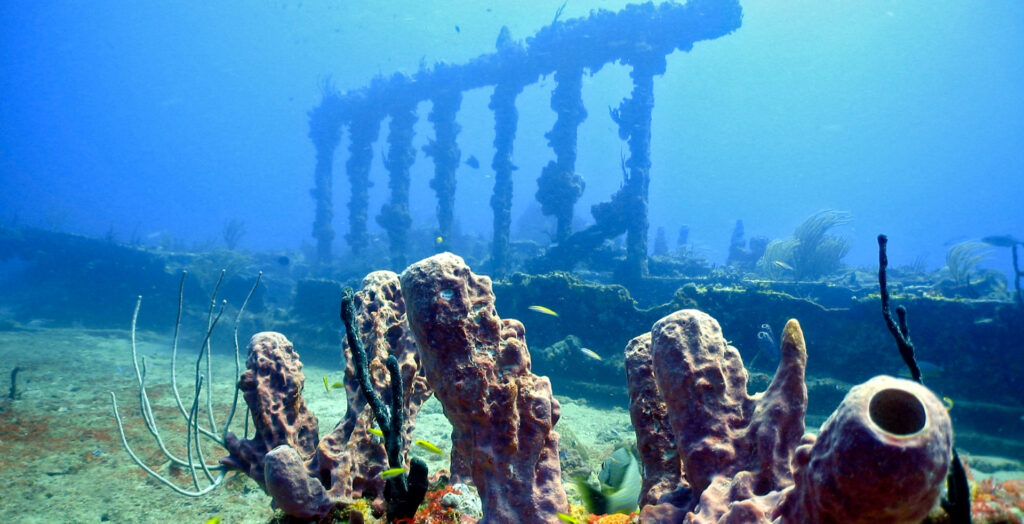
Recognized as one of the world’s top dive destinations, the BVI has become
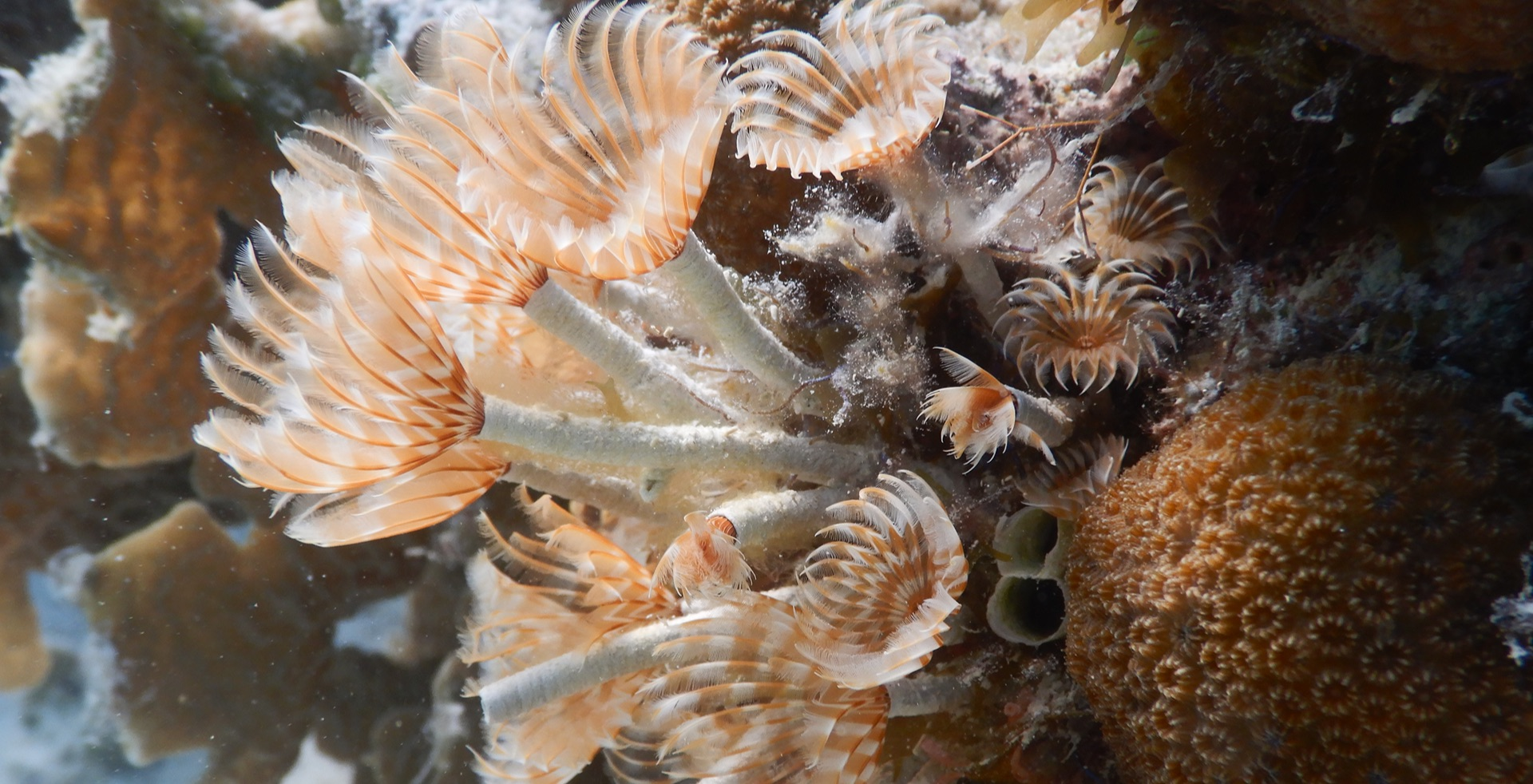
synonymous with the Wreck of the Rhone, regarded by many as the best wreck dive in the western hemisphere. Superb reefs for both snorkeling and diving are found in and around many of the anchorages. Numerous dive operators have programs to suit all levels and sailors can arrange for the dive companies to rendezvous at most of the more popular anchorages.
The BVI National Parks Trust maintains moorings for daytime use with permit. These moorings support both dive and snorkel sites along with sensitive sea bed areas in need of protection.
This story is republished with permission from Caribbean Compass (caribbeancompass.com), where it originally appeared. For more information on the Virgin Islands and the sailing areas of the Caribbean, pick up a copy of the latest 2026 edition of the Cruising Guide series or download the CruisingGuide app on both the Apple and Google stores or visit us at www.cruisingguides.com.
British Virgin Islands Entry and Exit Procedures
Ports of Entry:
There are four ports of entry for the BVI: two on Tortola, one on Jost van Dyke, and one on Virgin Gorda. West End/Soper’s Hole on Tortola is a popular entry/exit port for cruisers due to its proximity to the USVI. Spanish Townis the main harbor on Virgin Gorda and is the westernmost entry/exit port. See BVI Main Ports for more details on the ports of entry.
Advance Paperwork:
The BVI uses the SailClear system. Boats should preregister and submit arrival notification.
For many countries, a visa is not required. BVI immigration authorities typically issue a one-month entry stamp on arrival.
Vessels are granted up to 180 days before requiring a Temporary Import Permit (increased from 30 days September 2025).
Entry Process:
On arrival, the captain should immediately proceed to the nearest Customs and Immigration offices with the SailClear ID number, crew passports and boat paperwork. Reserved dress is recommended (no bathing suits/beachwear).
Exit Process:
Same as the entry process; the captain clears out in person at a port of entry with SailClear ID number, crew and boat documents.
Rates:
For a double handed yacht, entry and exit costs are approximately USD $100.
Check https://www.noonsite.com/place/british-virgin-islands/view/clearance/ for more detailed information and updates.
This story is republished with permission from Caribbean Compass (caribbeancompass.com), where it originally appeared. For more information on the Virgin Islands and the sailing areas of the Caribbean, pick up a copy of the latest 2026 edition of the Cruising Guide series or download the CruisingGuide app on both the Apple and Google stores or visit us at www.cruisingguides.com.