BVI “Smart Schools” Prove Going Green is Good
by Jane Bakewell
The BVI is learning that a community can grow and prosper when the schools put a special focus on environmental education. This encourages students to be the next generation of active caretakers – preserving and enhancing the gift they inherited. The non-profit organization Green VI has been a leader in implementing Green Initiatives involving both the community at large and the schools. Executive Director, Charlotte McDevitt sat down with me along with two of her young and enthusiastic managers to discuss compost, gardens, mosquitoes, water sourcing and lesson plans among other topics at their Eco Park’s dark blue “container” office.
After a few introductions to her managers, we all sat down to “get into the dirt” so to speak about environmental initiatives. I quietly noted Charlotte and I had matching local designer, Annie McPhail recycled sailcloth shoulder bags and stainless–steel water bottles – a joint environmental nod. We dove into a discussion about the Smart School initiative, which began in 2021 with a grant proposal under the Department of Disaster Management. The EU- funded program (RESEMBID) with the key word “resilience” at the heart, involved partners in the community to implement programs for Disaster Preparedness. Under the grant umbrella were the Ministry of Education, the H. Lavity Stoutt Community College, the BVI Red Cross, and GreenVI.
“Our involvement,” Charlotte explained, “was the Green component.” The goal was to get the 15 schools in the BVI “Smart School” certified, which involved areas of compliance in recycling, water management, food gardens, mosquito control protocols and energy audits. As of 2023, 13 schools have gotten their accreditation. Now, with that portion completed in two years, Green VI has carried on with the Green Schools Program, which continues to educate and further the idea of resilience, through lesson plans, eco-awareness and the schools garden program.
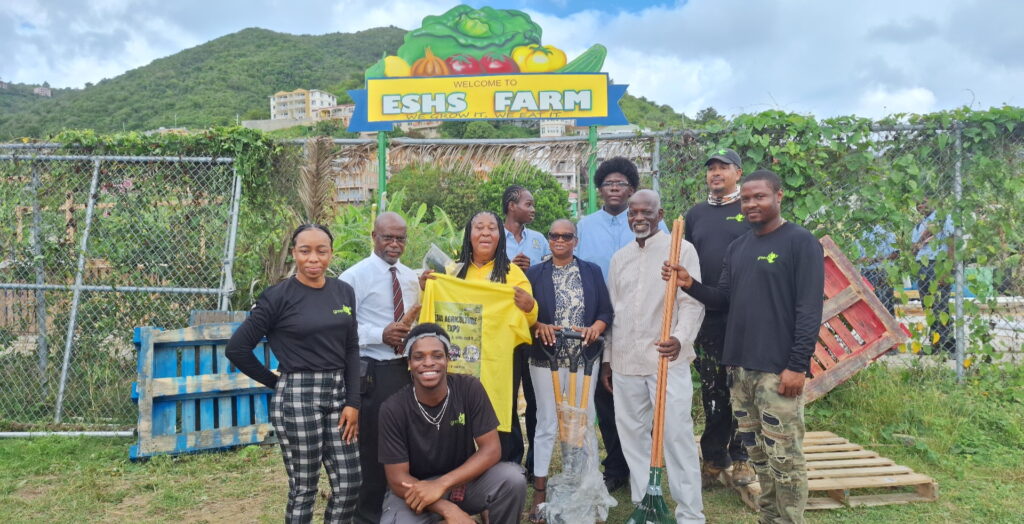
Sunita Reghuneth, Project Manager of the Green Schools and Outreach, spoke about the major themes covered in the program. Recycling is key and all the schools have both internal and external recycling bins. The Food Gardens are a hands-on school project for cultivating vegetables with raised beds made from polywood derived from the recycled plastics. Here there are also rainwater harvesting systems, compost bins, a tool shed and shady pergola seating for outdoor classroom lessons.
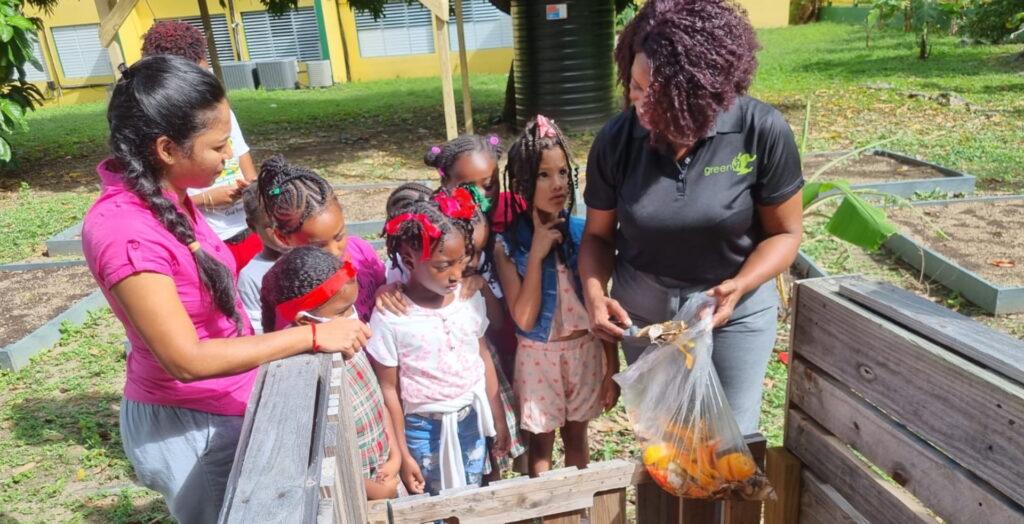
Compost is necessary to keep the soil healthy and compost collection bins was set up in schools for children to bring in their “organics” – fruit and vegetable peels. The water audit revealed the need for both rainwater catchment in barrels for the gardens and water generators for pure drinking water. The “BugOut” program showed the link between litter and mosquito breeding sites and that mosquito traps were necessary to learn about sustainable ways to deal with mosquitos. Traps were ordered that either killed the larvae-eggs or entrapped the mosquitoes with suction fans. The traditional government use of “fogging trucks” during peak mosquito season was frowned upon for damage to the environment and lack of results for decreasing mosquito infestation.
Lesson plans developed for the schools involved all themes involving – waste, water, energy, education and innovation. It was important that the youth understood the “why” behind the environmental concerns. Community outreach got parents’ involved in the recycling and composting needs. The program began to go full circle with outreach far beyond the classroom. Beach clean ups were organized to go after marine plastic waste harmful to the ocean and demonstrating the need for recycling. Children were working alongside their parents in environmental efforts that were planned as an outdoor game.
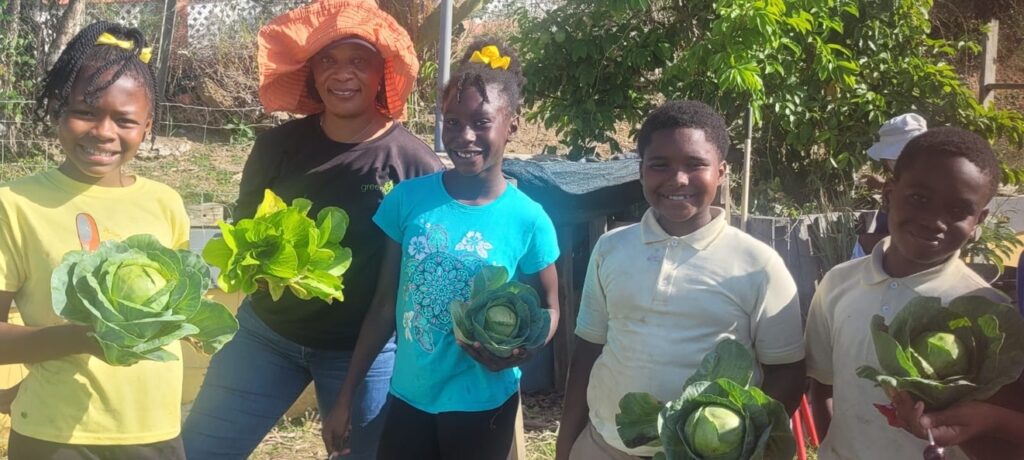
Natasha Harrigan, Project Manager of the Gardens Program, gave feedback about working with the students to plant and harvest the produce. Once a template was established about what to grow and where – keeping in mind that on Tortola with its volcanic landscapes there are varying temperature and rain conditions that need to be factored in when choosing what to plant. Francis Lettsome School in the East End was the first official garden project completed in 2019. Others enthusiastically followed in the years after with 11 Green Schools now sporting gardens with community support growing.
Some children had gardening skills from their own families’ backyard gardens, however for many it was first time to see the process from seed to food production giving them much more awareness about food waste. During the school Easter break, volunteer parents or community members and the Rotary Club volunteers make sure the gardens are watered and cared for. The beds are laid to rest with mulch during the Christmas break and during the summer months the garden beds are shut down completely.
Natasha explained the need for large quantities of compost vital for soil health. However, a thousand pounds a month was a challenge even though the children brought in compost from their own families’ tables. Here is where the community stepped in. Five restaurants on Tortola and two on Virgin Gorda began their own compost bins for pick up. The Green School program now extended to the awareness of local restaurants in their effort to assist in this cycle of seed to table produce production.
Soon the program for recycling became a fun game for the whole community. Contests were put forth for the most amount of collected – glass, aluminum and plastic. “The parents were the most competitive,” Natasha laughed. “They raided the trash cans of restaurants, bars, neighborhood collection bins.” Parents were challenged to join in the beach clean ups to encourage the youth to fulfill their “Community Service Hours” as required by the schools.
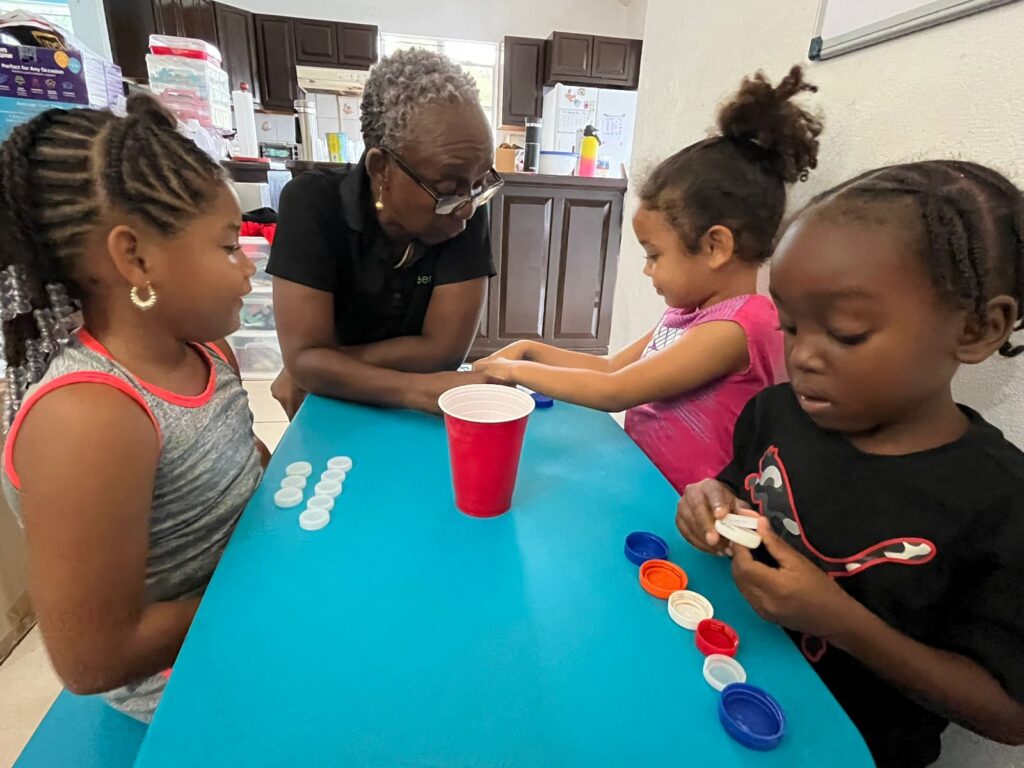
It appears with the Green Schools and other Green VI initiatives, minds are being changed in the islands. Charlotte mentioned as the meeting was wrapping up, “It used to be “not cool” to be a farmer, but now many youths see that differently.” Produce from the gardens is used by the schools and sold to staff and parents to encourage young “agriprenur” ambitions.
As Charlotte walked me out to her hybrid car that was “on electrical charge,” I realized whether it be recycling, water collection awareness, utilizing compost for gardens or cleaning up our beaches – environmental awareness is on the rise and that is a good thing for the BVI!
For more about GreenVI and their varied projects go to:
Home
Read The BVI Insider’s Story on another GreenVI initiative: