The BVI’s Splendid National Parks
By Claudia Colli
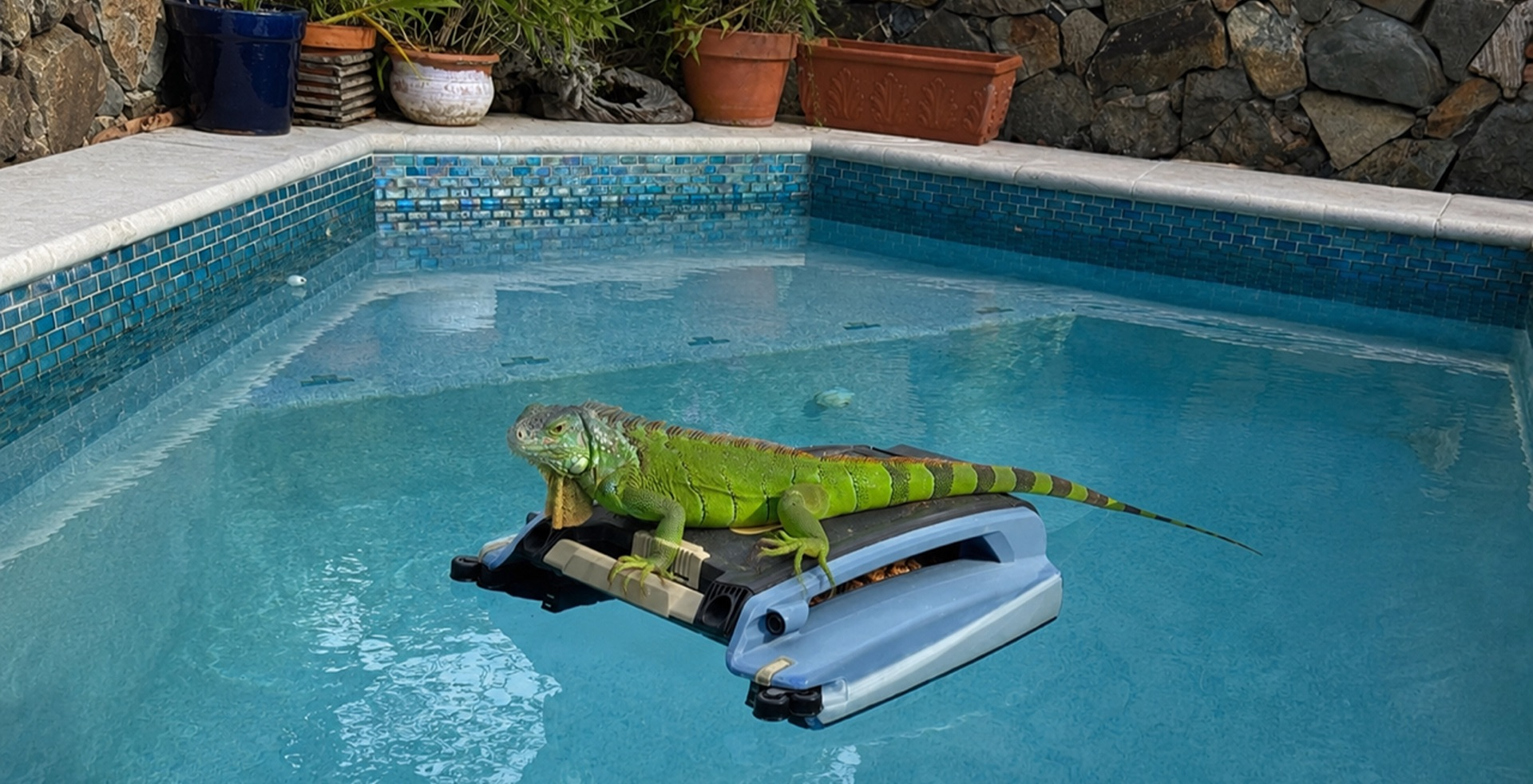
The BVI’s national parks are among the world’s most splendid and I enjoy nothing better than visiting these parks and their many wonders. In all, there are 21 BVI national parks. I am impressed that such a tiny nation in the midst of the Caribbean could boast so many. These parks are beautiful to visit, but importantly, protect the area’s fragile plant life and fauna. An indigenous lizard found on Virgin Gorda is the world’s smallest while a host of native plants found nowhere else are an important component of the BVI’s eco-system
The BVI’s first national park was Sage Mountain, established in 1964 through the efforts of local conservationist and businessman, J.R. O’Neal and an American philanthropist, Laurance Rockefeller. Rockefeller, also an ardent conservationist, had acquired the land for the national park in the US Virgin Islands in St. John in the early ‘60s where he had also started the luxury resort, Caneel Bay. He was equally entranced by the British Virgin Islands where he purchased 90 acres of land at Sage Mountain, Tortola’s highest peak. His and O’Neal’s collaboration was a milestone for the BVI’s national park system.
Among the Park Trust’s recent accomplishments are significant upgrades to park infrastructure and visitor experiences.
Major improvements were completed at The Baths National Park and Devil’s Bay National Park, including trail stabilisation, new signage, and enhancements to welcome areas.
At Spring Bay National Park, essential walkway upgrades and repairs enhanced visitor safety and accessibility following storm runoff damage. Upgrades were also made at Queen Elizabeth II National Park and the JR O’Neal Botanic Gardens. Each park upgrade, trail repair, and restored habitat was designed to create a more resilient parks system.
The scope of national parks in the BVI is impressive and each is breathtaking in its individual beauty. Come with me to explore just a few of my favorites:
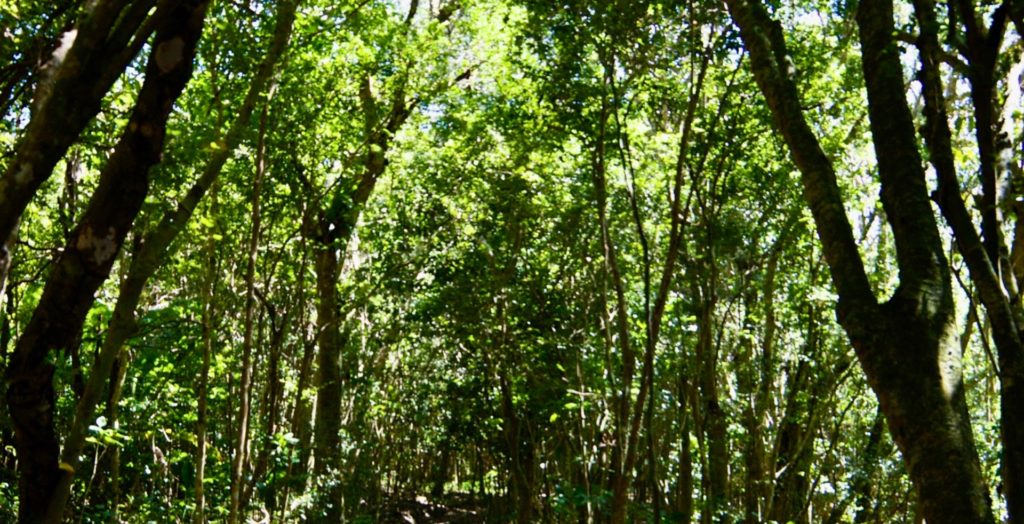
Sage Mountain National Park which started it all, remains one of my top picks. At 1,716 feet and 127-acres, the park has lofty views, cool breezes and a variety of tropical and dry forest vegetation. The park’s numerous trails are graveled and easy to follow. There are two distinct sections to the park. A trail climbing to its highest point is located behind you across from the entrance gate. This trail leads up through a second growth mahogany forest to a lookout at the top of the park.
For a more tropical rainforest experience, go through the gate and take the main trail straight ahead, but then diverge off onto the Henry Adams Trail to the park’s lush northern section. The path leads to a wooden staircase, and past giant elephant ears, large boulders, tall trees dripping with hanging vines, and a myriad of lacey ferns. Eventually the trail will loop around to a majestic banyan (part of the ficus family of trees). With its thick canopy and tangle of aerial roots – the tree provides a great photo op.
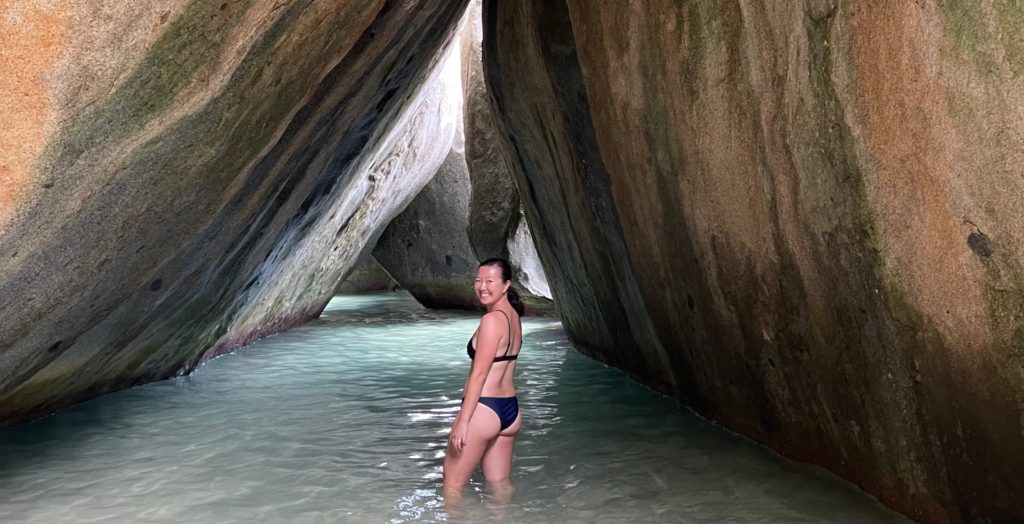
The Virgin Gorda Baths National Park. Although I have been to The Baths many times, I never fail to be amazed how beautiful they are. This series of giant granite boulders that are stacked on top of each other like giant building blocks is a wonder of the world. In the first chamber the boulders loom high above -a triangular space of mystical proportions, below is a quiet pool, sea green and still as a mill pond. Further along, there is a domed ceiling perfect for a Michelangelo – and it is hard to believe that it hadn’t been carved out by man. This and other sculpted effects though, were caused by the eroding forces of the southeasterly trade winds and moisture. A certain amount of dexterity is required to negotiate the chambers, but a series of ladders and ropes help explorers along the way.
With a dedicated staff which includes administrators and rangers, the Trust has established multiple collaborations to make the BVI’s park system and the islands’ ecology more resilient. Among them are ongoing projects with botanists and researchers from the prestigious Kew Gardens in the UK. For more than a decade, the Kew researchers have made numerous trips to the British Virgin Islands as part of the Darwin Initiative, which conducts biodiversity assessments of countries throughout the UK’s Overseas Territories and is part of an effort to identify and protect native species.
The Baths National Park is actually comprised of three of the BVI’s loveliest beaches. Devils Bay, a half-moon of pure white sand is the end point of the climb through the boulders at The Baths. Spring Bay, calm and beautiful, is another spectacular white sand beach. It is sprinkled with the same large boulders that are the hallmark of this part of Virgin Gorda. It is a bit like a beautiful sculpture park.
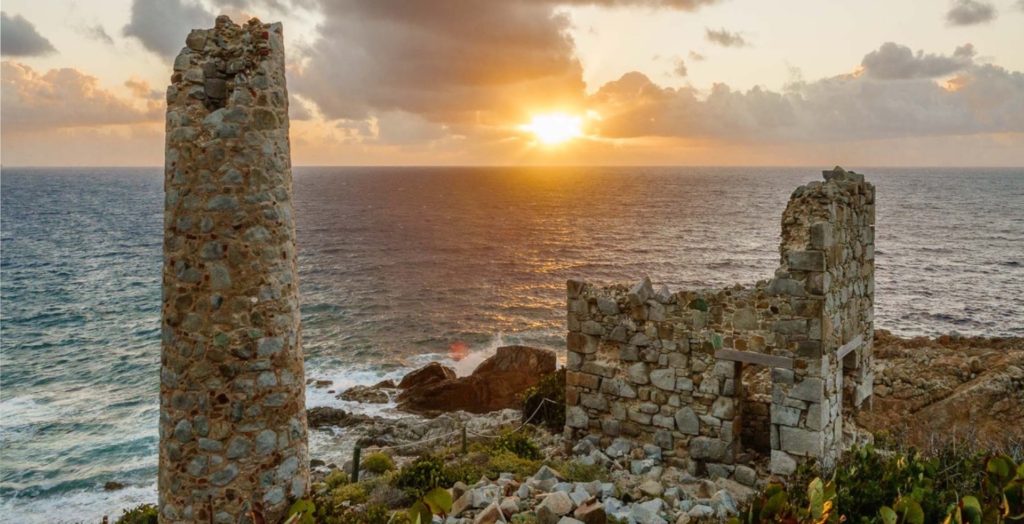
The Coppermine is one of the organization’s most unique BVI parks. Located on a windswept bluff on Virgin Gorda, it was built by Cornish miners in the 1860s. I love to stand on the stony grounds and look up at the tall chimney fashioned meticulously from local stone. It is easy for me to get swept back to the time of Poldark, a popular PBS melodrama celebrating 18th century miners from Cornwall, England. Decades later it was Cornish miners who ventured across the sea to mine this site on Virgin Gorda.
Another of my favorites BVI parks is Sandy Cay, a small island off the eastern end of Jost Van Dyke. It is a popular port of call for yachtsmen, since there is no ferry here. But whenever I am out boating, going to Sandy Cay is a must! It is rimmed by a powdery sand beach and its waters are among the islands clearest, which is saying something. Originally owned by Laurance Rockefeller, Sandy Cay was managed as a private reserve until it was transferred to the National Parks Trust in 2007, three years after Rockefeller’s death. The island is small enough to walk around its entirety in less than an hour. Each step will give you a new view. Up pops Tortola, and then there is Jost Van Dyke and its small cousin, Little Jost Van Dyke.
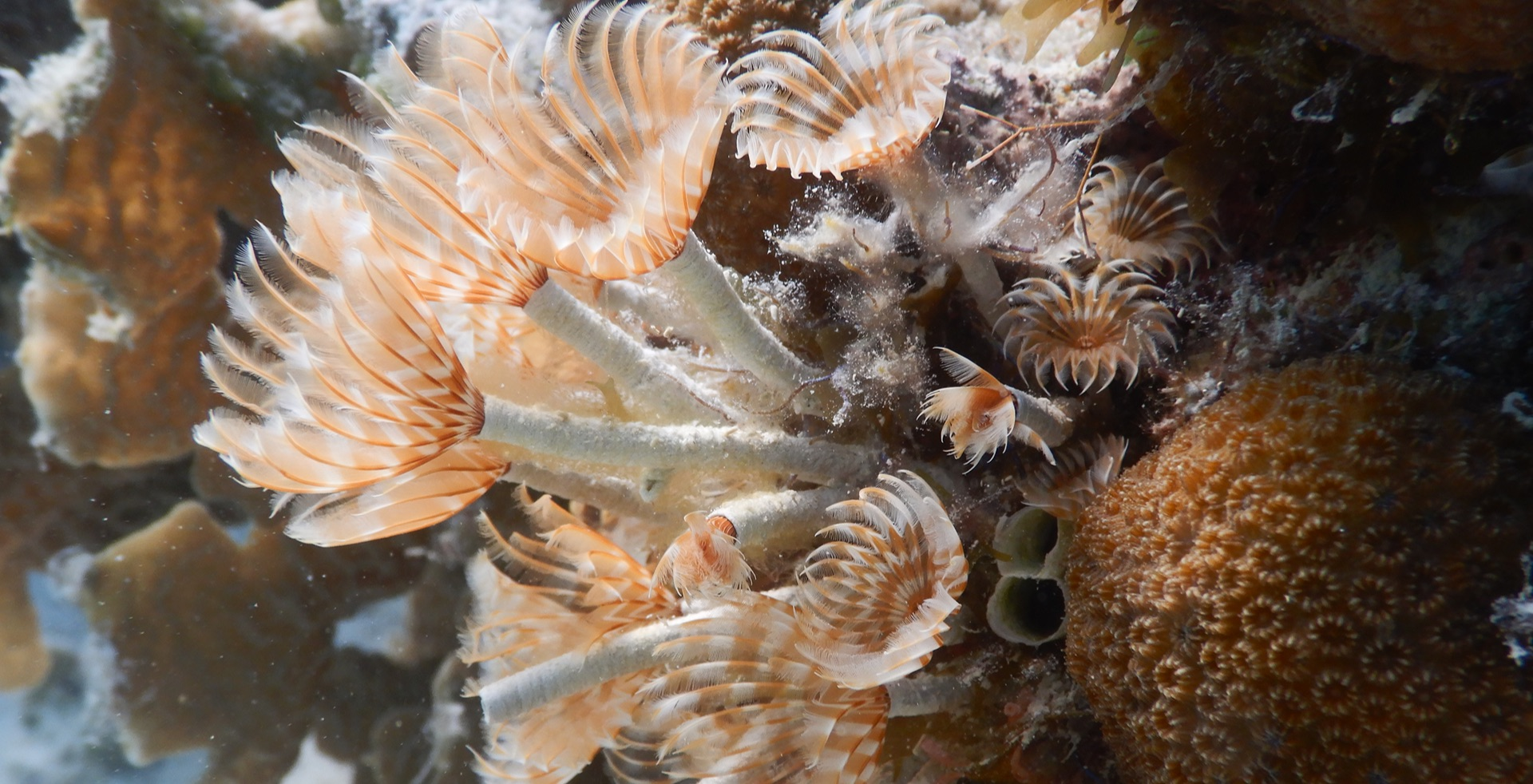
The Wreck of the RMS Rhone, is one of the Caribbean’s premier dive sites and is the BVI’s most famous shipwreck. It has been an underwater setting for The Deep, the movie based on the Peter Benchley book starring Nick Nolte and Jacqueline Bisset, and it is at the top of the list for divers from around the world, both beginners and expert. The source of its mystique has a lot to do with its short and tragic history: the victim of a devastating hurricane, which hit the Virgin Islands with terrifying ferocity in October 1867. There were only a few survivors with most passengers and crew lost. Today its remains, found just off the western end of Salt Island, are well-preserved, its structure encrusted in coral and teeming with colorful marine life. If you are a diver this has to be on your top ten list of shipwrecks to explore.
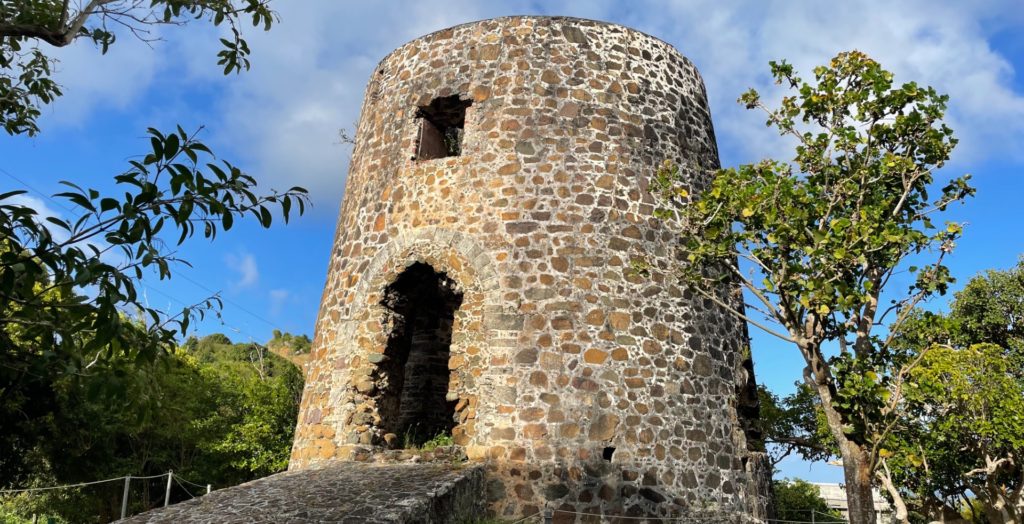
The Mount Healthy Windmill, is a small park with an abundance of historical significance. The late 18th century windmill overlooks a valley above Brewer’s Bay on the north shore of Tortola. It can be accessed from the eastern Brewer’s Bay road and overlooks a verdant valley above the bay. Shady and cool, with benches and a picnic table, I picnic here from time to time with family or friends. The large stone windmill which looms large on the site transports me back to the BVI’s sugar growing past. The structure was built by Bezaliel Hodge prior to 1780 but upon his death was taken over by the island’s largest landowner James Anderson. The power generated by the windmill was used to operate a crusher to extract juice from the sugar grown on the surrounding hillsides. Most mill rounds in the BVI were animal operated, and the Mount Healthy Windmill is the only known wind operated mill in the territory
The J.R. O’Neal Botanic Gardens in Road Town is a four-acre tropical refuge at the eastern end of Road Town and a microcosm of the region’s plant life. The gardens are named after Joseph Reynold O’Neal, the BVI businessman and conservationist who helped found the national parks trust. O’Neal, along with Margaret Barwick, a former governor’s wife and tropical garden expert, shepherded the gardens to completion in the 1980s.
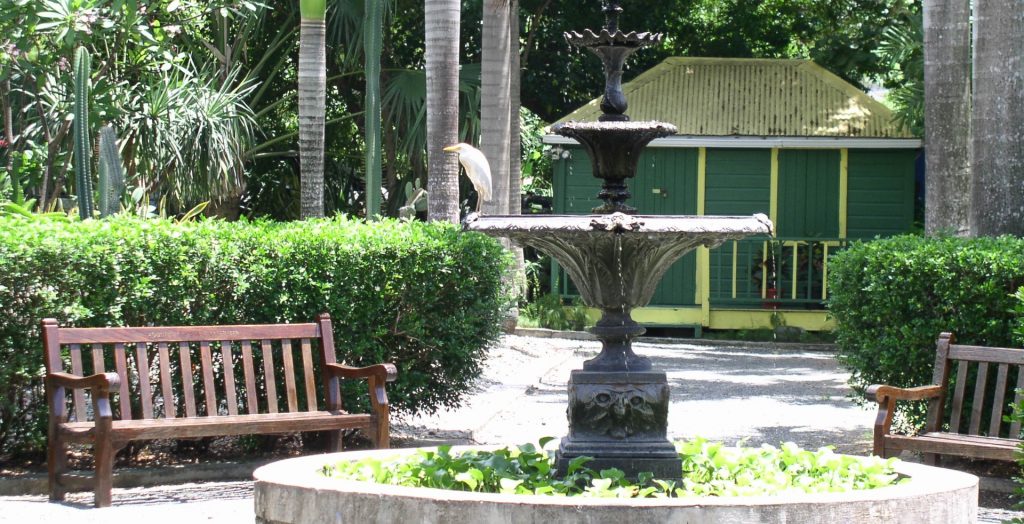
A majestic row of royal palms and a Victorian style cast iron fountain greet visitors at the garden’s entrance; pergolas draped in petrea and other flowering vines grace its pathways. The gardens, which sit on the site of the BVI’s original agricultural station, represent the different habitats of the BVI. There is a tropical rainforest section, examples of a dry forest habitat, a West Indian traditional herbal garden and an orchidarium.
A collection of rare indigenous plants including the endangered Acacia anegadensis, will help ensure the survival of this and other of the BVI’s endangered species. With the assistance of botanists from Kew Gardens in London, seeds and dried specimens of the BVI’s native plants are being collected and preserved at the park. A second set are kept at Kew’s seed bank in the UK.
The National Parks Trust of the Virgin Islands sums up its aims in its aptly worded Mission Statement: “The National Parks Trust of the Virgin Islands is dedicated to preserving the natural beauty and heritage of the British Virgin Islands by promoting awareness, facilitating access, and supporting conservation efforts for national parks.
Other BVI national parks include Queen Elizabeth Park, Road Town; Shark Bay, Tortola; Gorda Peak; Great and Little Tobago islands; Diamond Cay, Jost Van Dyke; Fallen Jerusalem island; Gorda Peak, Virgin Gorda; Cam Bay, Camino; Dead Chest off Peter Island; Little Fort, Virgin Gorda.
For a complete list of the BVI’s national parks go to: https://bvinationalparkstrust.org
For more on places to visit in the BVI go to: https://thebviinsider.com/activities-best-things-to-do-in-the-bvi/