Salt Island and its Salt Harvesting Tradition
By Claudia Colli
I met Clementine on my first trip to Salt Island in the late 1970s. She along with her sister Beatrice, Beatrice’s husband Clarence and Norwell Durant were the island’s only remaining residents. Hardy and resilient, they still harvested salt from Salt Islands’ two salt ponds, continuing a tradition that spanned well over a hundred years.
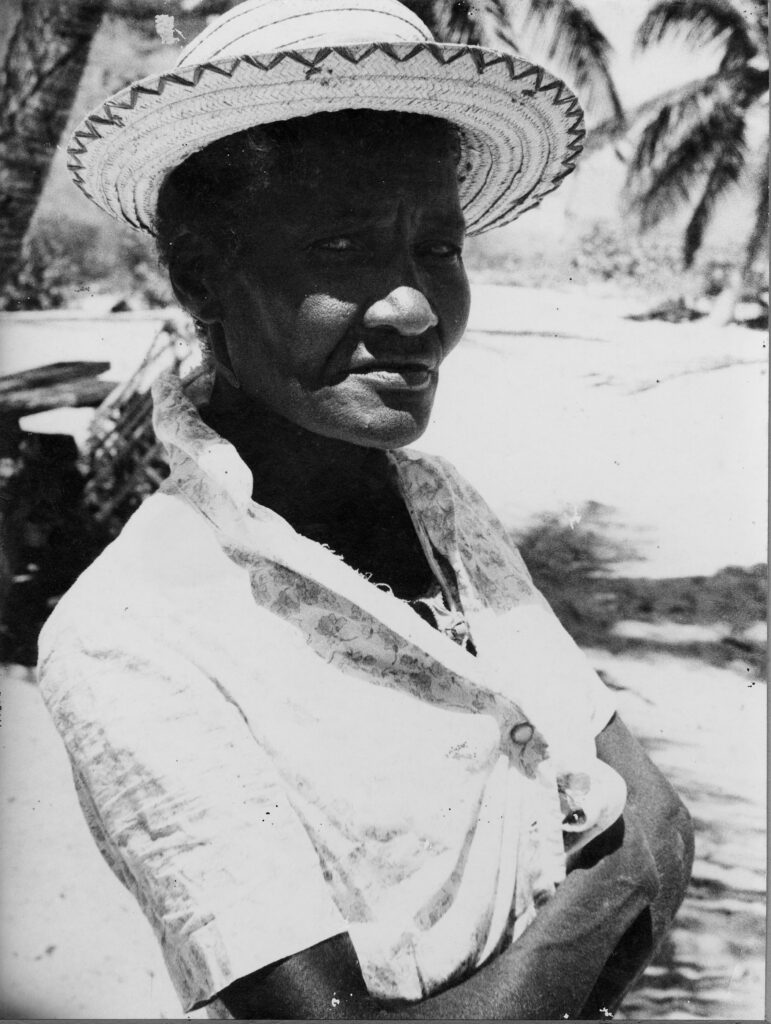
At the time, it was a glimpse at another era when BV Islanders worked with their hands and made the most of the Territory’s meager financial resources. I was impressed with Clementine’s distinguished bearing, her hardworking ethic and self-sufficiency. The remainder of Salt Island’s residents had migrated off the island to Tortola and the US. But Clementine, Beatrice and Norwell stuck with it, refusing to leave the island they grew up on.
Salt Island had once been a tightknit community of rarely more than a 100 people, who forged a life of family and tradition. Salt Islanders were self-sufficient and stalwart, weathering hurricanes and isolation. The work of harvesting the salt was backbreaking and the income meager, but through the years they persevered, taking pride in a job that was integral to the island’s culture and commerce.
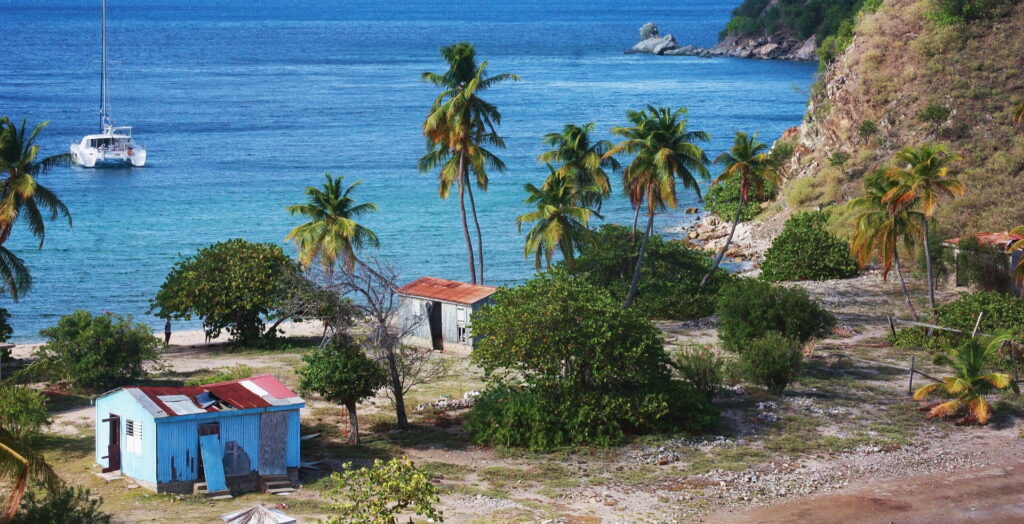
Prior to refrigeration, beef and fish were salted for preservation. In the 18th and 19th centuries, ships passing through the British Virgin Islands would anchor in Salt Island’s bay to stock up for their journey. Salt was equally essential to island residents who would travel to the island to fill their cupboards for the coming year.
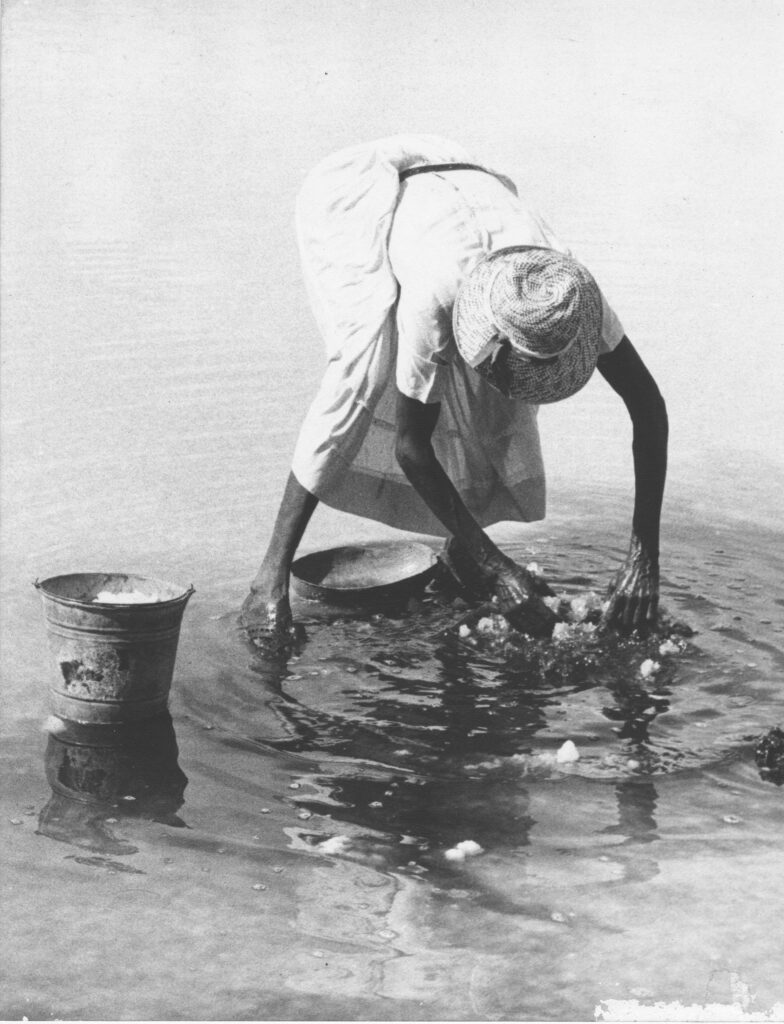
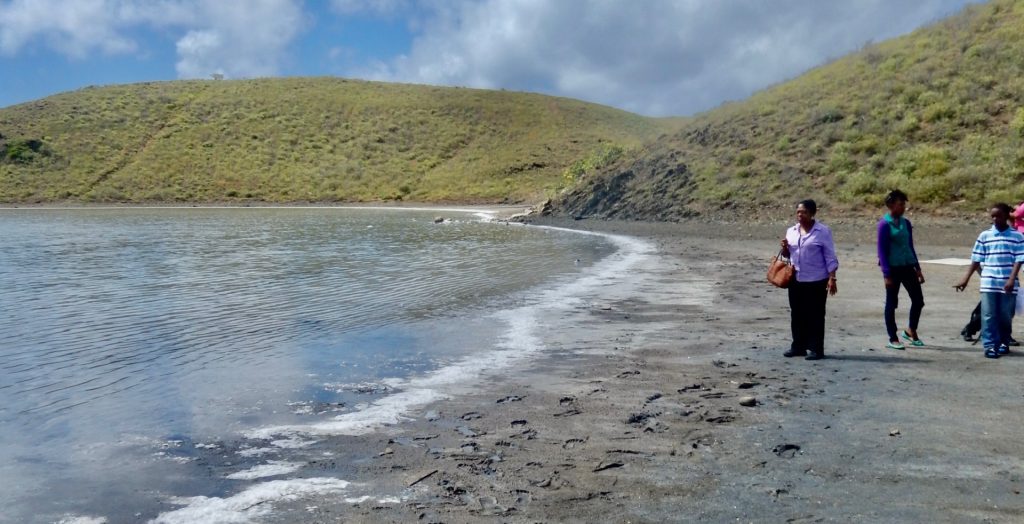
During the dry season the water in the island’s shallow salt ponds slowly evaporates leaving its salt content to form a hard crust on the bottom. When the edges of the ponds are rimmed with the sparkling crystal (generally in April or early May) they are ready for harvesting
So important was salt to the Virgin Islands’ economy that harvesting was regulated by the government. Supervising the event would be an islander appointed as government agent. His post, along with all the rules regarding the pond’s reaping was created by legislation extending back to the Government Salt Pond Ordinance of 1904, which invested ownership of the salt to the crown.
According to the law, harvesters were required to give the government one bag of salt for every three collected. This levy was later reduced to a ceremonial pound of salt for the Queen. At one time 1,000 pounds of salt was reaped from the island’s two salt ponds annually.
In order for the salt to be harvested in the coolness of the early morning hours, the Virgin Islands’ Administrator, and later the Governor, would journey to the island at 5:30 am to declare the pond open. A member of the Royal Virgin islands Police would fire a shot in the air, and the public would walk to the pond and start reaping salt for two days, the amount of time allotted by law.
The event, which was known as the “Breaking of the Pond,” was so popular a festival preceded it. Scores of boats from neighboring islands would start arriving the day before, and by evening the dancing, singing and eating would be well underway, carrying on until late into the night.
The end of the salt industry began in the mid-20th century when imported packaged salt became commonplace. The development of the tourism industry in the 1960s and 70s meant that well-paying jobs were available on Tortola and at the neighboring island resorts that were springing up throughout the territory. With the draw of a more prosperous life for these Salt Islanders and their children, they began to move away. By the 1970s only a persistent few remained, most notably, Clementine, Beatrice and Clarence and Norwell Durant. As she got older, Clementine moved to Tortola where she passed away in 1998. The passing was noted by her granddaughter Riisa Smith in a post on the BVI Community Board (see below). Eventually, only Norwell remained there, harvesting salt and selling salt-filled pouches to visiting sailors who anchored in the bay.
With Norwell’s passing, Salt Island became uninhabited. Yachtsmen still visit, attracted by the islands’ mystique, not just because of its unique history, but as the location of the Caribbean’s most famous shipwreck, the RMS Rhone. The Royal mail packet steamer, was dashed against the rocks off Salt Island’s rugged shore during a hurricane in October of 1867. Virtually all of its crews and passengers went down with the ship, and a number of its victims are buried on the island. The shipwreck was even used as the underwater backdrop for the 1977 film, The Deep, and to this day it remains a big draw for divers from around the world.
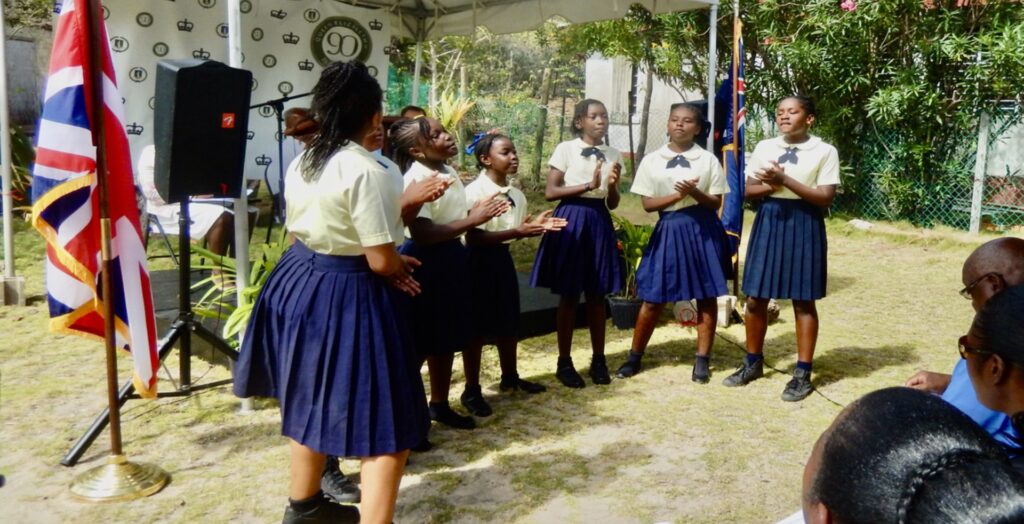
Although now spread throughout the Virgin Islands and the world, descendants of Salt Island’s original residents remain a closeknit community. On many summers they gather for a reunion on its beach aside its main salt pond. A large ceremony attracting descendants, government officials and island residents was held in June of 2016 in honor of the late Queen Elizabeth II’s 90th birthday. I was there for that occasion as well and thought of it as a fitting tribute to not only the Queen, but to all the Salt Islanders who once lived and toiled there.
More about the BVI’s islands at:
A remembrance of Clementine Smith by her granddaughter can be found on The BVI Community Board.
https://www.facebook.com/groups/178954908878855/posts/6156942427746710