A Tour of Tortola: Conchs, Sunsets and Rum
By Claudia Colli
When first time guests arrive on Tortola, the first order of business is a tour of Tortola. So, when my cousin, Ellyn and her son Ted arrived, we packed snacks, beach chairs and a sense of adventure and got on the road. Tortola is a classic Caribbean island of sand, palm trees and rum. But adding to its allure is the island’s third dimension: its dramatic mountainous terrain. Looking at these hills you would think there are only two directions on Tortola – up or down, and you wouldn’t be wrong.
My cousin is a New York City girl so I knew she would be blown away by the scenery, but I wasn’t as sure how she was going to take the rugged geography. She doesn’t drive, no need to, and her neighborhood is flat with convenience stores just down the block. This, I thought, will be an interesting trip.
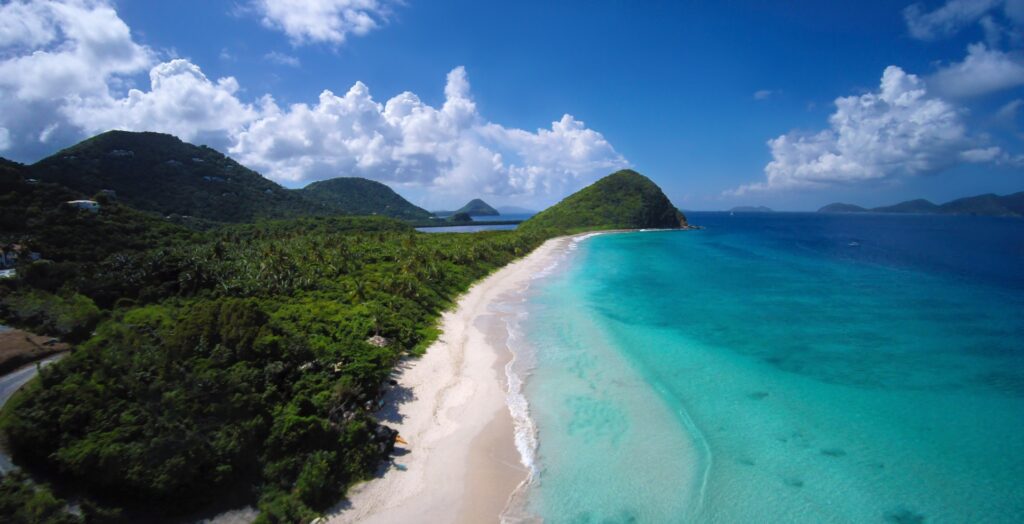
Our starting point was Long Bay, a stunning vista with a mile long ribbon of sand lined by a resort and guest villas. It is the first beach I went to when I arrived in Tortola and is still my favorite, a place to walk and contemplate. A thousand years ago, a Taino Indian village was nestled into the back of the beach where its inhabitants lived in thatched pavilions and performed intricate rituals celebrating the sun and the solstice.
Way after the Tainos, the English settled here where they grew sugar cane on the hillsides and built a sugar mill, which now accommodates the Long Bay Beach Resort’s restaurant. Its thick stone walls exudes history.
For Ellyn and Ted the view alone scored a ten.
Our next stop was Little Apple Bay, a beachside village with a school, a series of small houses in what is referred to as “the Bottom” and two hotels (Sebastian’s on the Beach and Sugar Mill).
From Apple Bay we negotiated a small hill and entered the fishing village of Carrot Bay. Why it is named Carrot Bay is a mystery to me. It is a charming village, and mangos and bananas, not carrots, are its most prevalent crops. It is also a fishing center with colorful wooden fishing skiffs found along the shore.
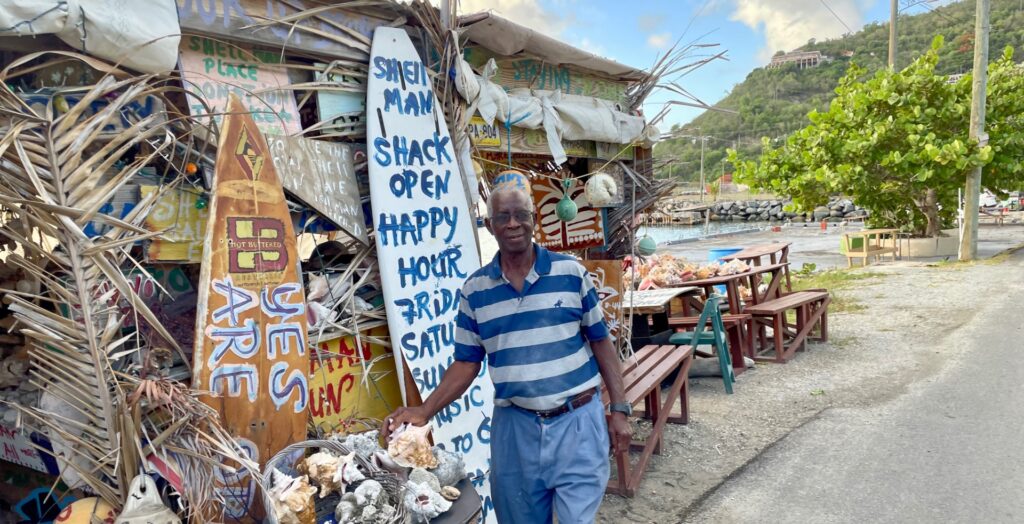
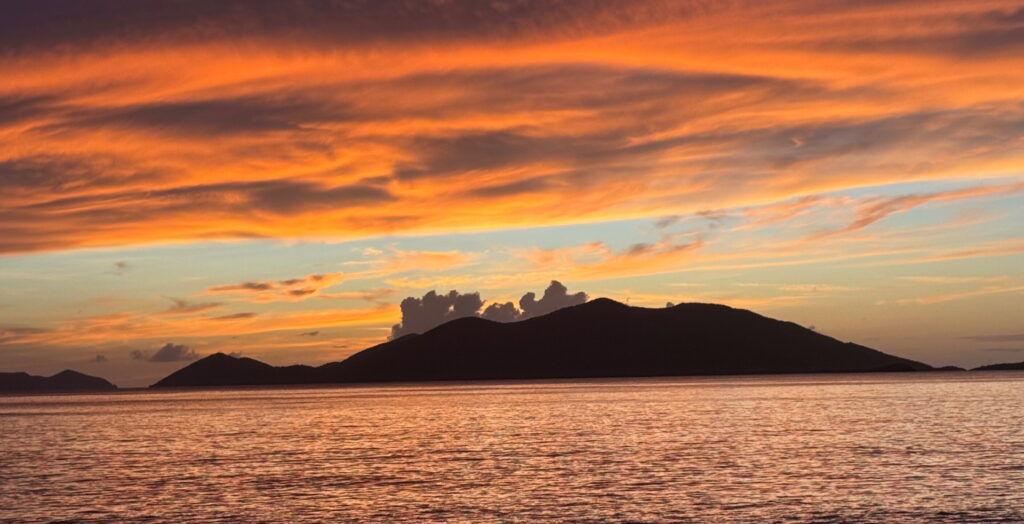
Some of the best sunsets on the island can be found late afternoon at the Coal Pot, a local restaurant. We were too early for sunset so I instead pointed out the colorful mural of Carrot Bay life decorating its wall. Further down the road, I stopped in front of the North shore Shell Museum.Housed in an open-air wooden building, the “museum” displays hundreds of conch shells and hand painted signs with pithy aphorisms penned by owner Egbert Donovan. Donovan holds court here recounting stories of the “good old days” and its fishing and cultural traditions.
From Carrot Bay, I tested Ellyn and Ted’s mettle as we negotiated the numerous hairpin turns on Windy Hill as we made our way to Cane Garden Bay. Ellyn is a great sport, although I thought I saw her suck in her breath a couple of times. Ted, who grew up riding the roller coaster at Great Adventure, thought it was a blast. The Heritage Villas hotel and restaurant, which is perched along one of these turns, promotes its stunning view. We got out of the car briefly to look out at Tortola’s north shore: Carrot Bay, Apple Bay and Long Bay stretching into the distance.
At the top of the hill, Stoutt’s Lookout offers wings, rum and yet another one-of-a-kind view, this time looking down onto Cane Garden Bay, the BVI’s most popular beach. It is a fun spot I will admit. A horseshoe shaped beach of sparkling white sand, the shore is lined with beach bars and restaurants, many with live bands.
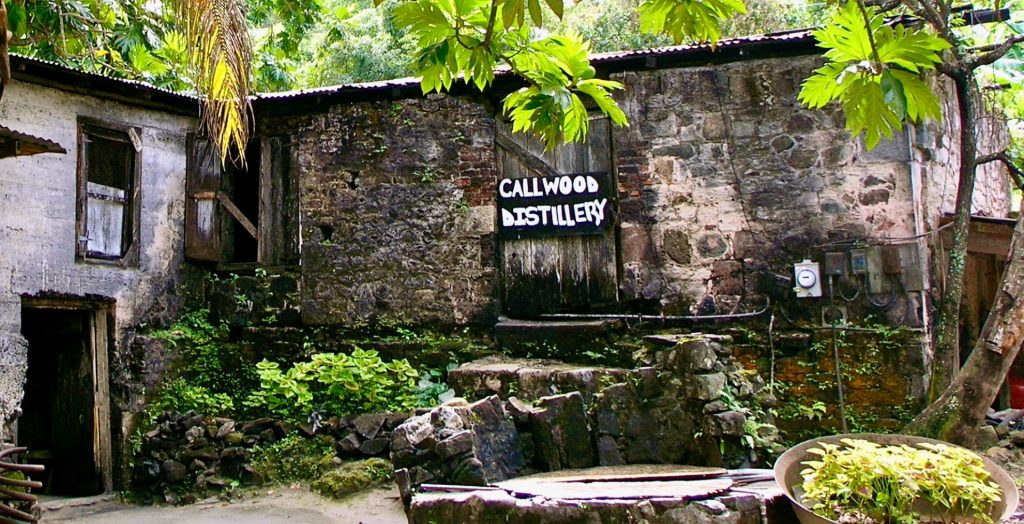
Our first stop was the Callwood Rum Distillery. At over 300-year-old, the thick stone-walled building houses the only still operational rum distillery in the BVI and is redolent with the pungent smell of fermenting sugar cane. For a nominal price the owners, the charming Mark and his sister-in-law Tamika, took us on a brief tour, describing the rum making process and the building’s history. Buying a bottle of the Arundel Rum was a given.
We had lunch across the way at the Indigo Beach House, a charming restaurant with blue shutters and a cozy inner courtyard on the western end of the beach. The house was once the home of a well-known New York artist and his studio is now the kitchen. The bar is in his living room and a balcony facing out to the beach is lined with tables. After lunch, Ted had a dip, awestruck by the clear water where unlike a New York beach you can see your toes through the glistening water. Soon, it was time to continue our trip around the island. We had a full agenda. Tortola is only 18 miles long from west to east, but its up and down nature can make it seem a lot larger.
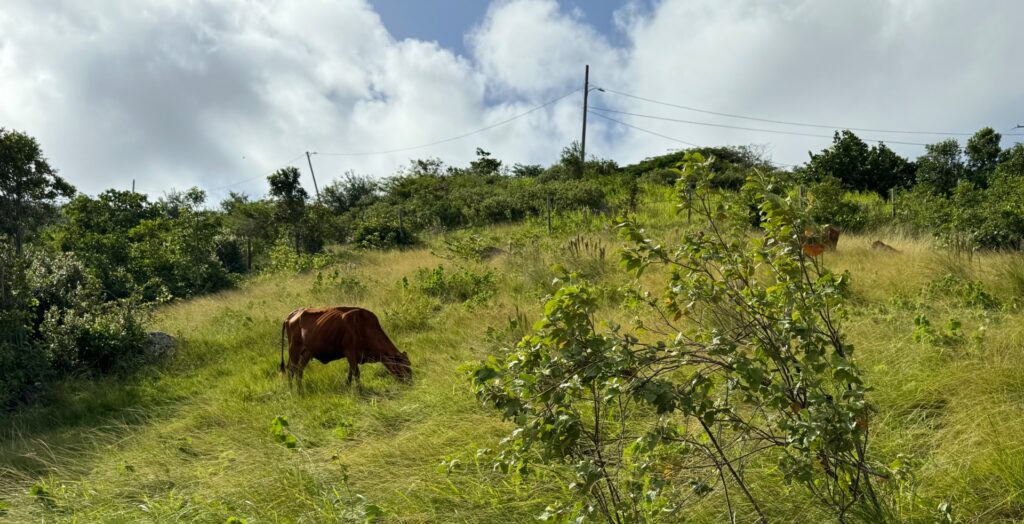
From Cane Garden Bay we climbed upwards along Joe’s Hill on the bay’s eastern side. At the top we took a left and carefully traversed a narrow ribbon of road along Soldier Hill. Then it was down again to Brewers Bay. Nestled into lush foliage, this bay is quieter than Cane – Nicole’s on its western end is its only beach bar. There are a few villas along its hillsides and an occasional herd of cow will munch on grass in a grassy meadow on its eastern end. The name Brewers Bay is no mystery. It is derived from the rum industry that once flourished here, and the remnant of a stone and brick distillery leans precariously over a section of the road.
A shady almond tree at the back of the beach seemed like an ideal spot to break out the beach chairs, open a bottle of wine and revel in the view.
But there was a lot to see still, so after an hour we packed up the chairs and beach bag and started the precipitous climb out of Brewers Bay, this time along the road on its eastern end. Our aim was to get to the Ridge Road, but first we had a historical pit stop – the Mount Healthy Windmill. I love this spot. The tall cylindrical stone mill was once part of a vast 18th century sugar estate. The only wind driven mill on the island, all others utilized animal power, the site is now a national park. The wind mill is tall and majestic, despite missing its blades, and posing in front of its large opening is a great photo op.
Driving along the island’s spine was next on the tour. At the top of the Brewers Bay Road we took a left and continued eastward along the narrow ribbon of tarmac that comprises the Ridge Road. The road is narrow and twisty, but the views along the way are spectacular. Colorful houses dotted the roadside and some cows grazed in a rolling meadow. There is a lookout looking down onto Road Town, the BVI’s capital city and multiple views of the north shore beaches: Trunk Bay, Rogues Bay, Cootens Bay among them. Thin strands of sand and turquoise blue water shimmered in the distance. A long mural depicting island life decorates one part of retaining wall and has become a stop on most island tours.
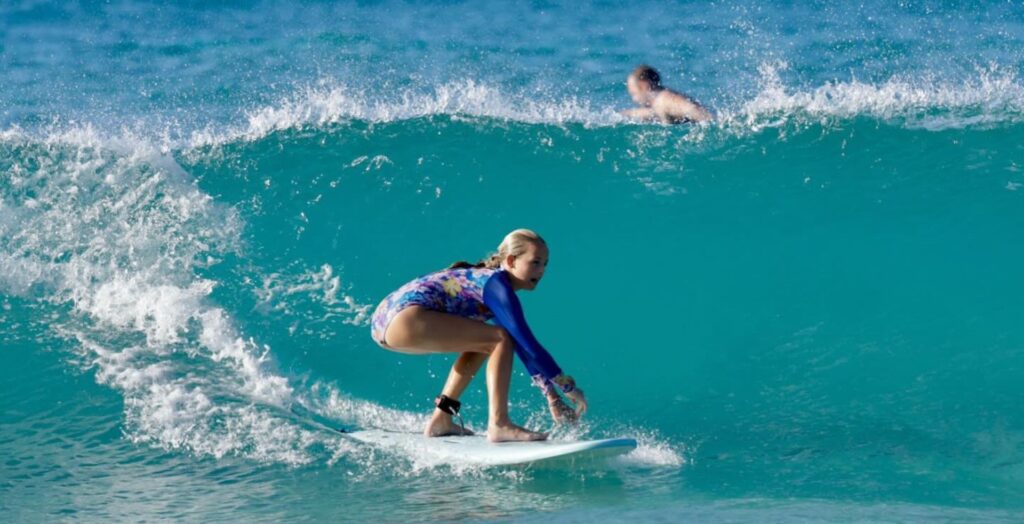
Our last stop was a late afternoon drink at the beach bar at Josiah’s Bay. This east end beach has pure white sand and an infinite view. When the winter surf rolls in, the beach attracts dozens of local and international surfers to ride its waves. There is even a surf school here specializing in teaching a new generation to surf. For a while, it was a fun to watch the surfers as large waves rolled in especially when they wiped out. But surfing was not a priority for Ellyn and Ted who were happy to sip their rum punches and bask in the sun.
I enjoyed sharing this tour of Tortola’s many attractions, its views and its heritage. There was a lot more to see. But that would have to wait for another day.
Additional information The BVI on can be found at the following websites: